PUCL Consultation against Custodial Torture in India
Relevant State
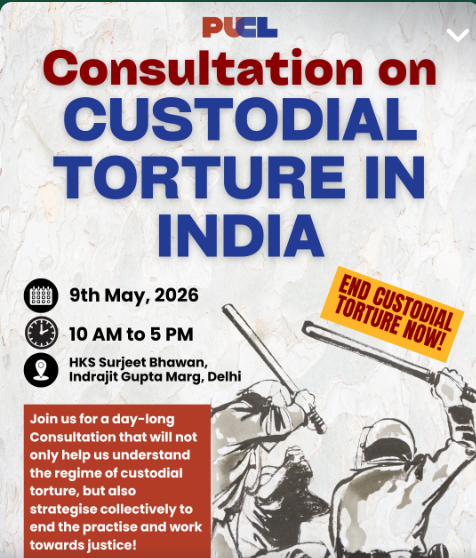
The Consultation was held on the 9th May, 2026 at the HKS Surjeet Bhavan in Delhi. This timely consultation was attended by over 150 people indicating the deep relevance of the theme.
Background and concept
The impetus to the consultation was the recent case of the illegal abduction, detention, and torture of eleven students by the Special Cell of the Delhi Police (12–14 March 2026) has shocked the public conscience. Survivors have testified to severe physical, psychological, and sexualised violence. They claim that they were beaten on their genitals, forced nudity and non-consensual sexual act. The fact that the incident occurred in the national capital reflects a grave erosion of constitutional safeguards and accountability.
This was not an isolated incident. Four of the eleven youth picked up in March, 2026 were also part of the ten illegally detained in July, 2025. At that time as well, the PUCL had intervened strongly and written to the NHRC and other authorities.
Even in the recent case of the NOIDA workers strike, activists complained of custodial torture in UP. Sexual torture although rampant is yet not disclosed by women, due to the stigma attached to it.
A troubling trend in torture practices is the growing frequency of cases where the police targets the accused from minority communities and later parade them with broken bones and torn clothes. The sight of limping men or plasters around their arms and legs is enough to tell the story of how brazenly, custodial violence is underway in all police stations across states.
It is endemic across India. In regions specially Kashmir, the north eastern states of Assam, Manipur, and the Adivasi areas of central India, such practices have become an everyday reality.
This is facilitated by a culture of impunity. The culture of impunity flows from the mechanical way in which magistrates deal with remand, without talking to the accused or even looking at them. This is a grave dereliction of a constitutional responsibility as magistrates are the first link, and torture can be identified and stopped at primary stage itself if magistrates function in accordance with their oath to protect and preserve the Constitution of India. Even today, it is almost impossible to prosecute perpetrators.
The latest NCRB data shows that there is a spike in custodial torture across the country. Between 1st January, 2026 and 15th March, 2026 (the first 74 days of the year), there are 170 cases of custodial deaths, much higher than two last financial years.
While the recent conviction of nine police personnel in the Sathankulam custodial deaths case marks a significant moment of accountability, it also underscores the systemic nature of custodial violence and the urgent need for structural reform.
Learnings and Action points from the Consultation
The consultation had sessions which not only deal with understanding the regime of custodial torture but also focus strongly on strategies on how to end this constitutionally abhorrent practice of custodial torture.
What was one of the important learnings from the consultation was the way survivors of torture responded to the acts of indignity they were subjected to. The young people narrated the instances of indignity with a quiet dignity. The survivors powerfully communicated their commitment to ending torture by their resilence. Both Dr Suresh and Henri Tipaghne communicated that one of the critical components of dealing with torture is a widespread public campaign against torture along with a training of the public on how to operationalise the legal framework against torture as well as the constant pressure on institutions such as the NHRC to ensure that they delivered on their mandate to prevent and punish torture.
Click here to read the speech of Dr Alice Jill Edwards as well as the landmark, ‘Charter of Rights of Victims and Survivors of Torture and Other Cruel, Inhuman or Degrading Treatment or Punishment’ referenced by Dr. Edwards in her speech.