The Question of Inclusion: Citizenship, Census and Statistics
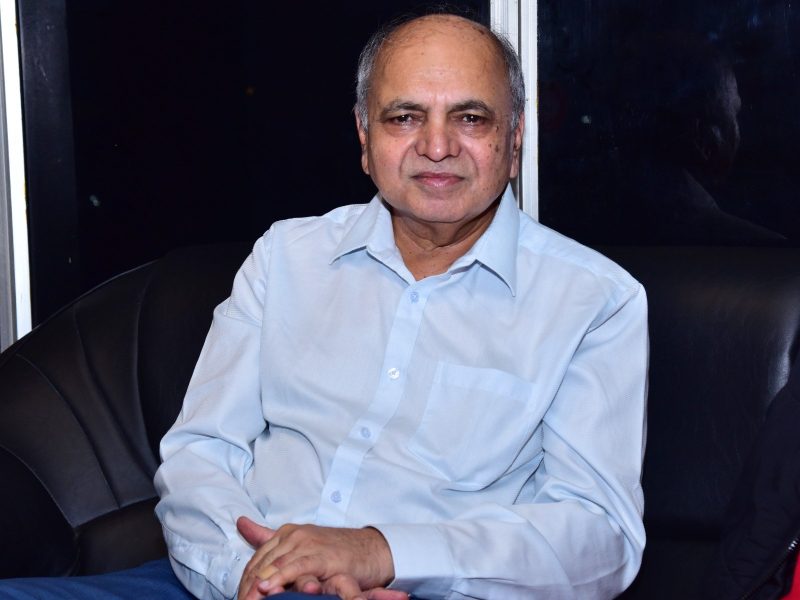
By GN Devy
(On the occasion of PUCL’s Foundation Day, a lecture by the renowned linguist and social thinker Prof. G. N. Devy, titled “The Question of Inclusion: Citizenship, Census and Statistics,” was held on 28 June 2026 at the Praudh Shikshan Samiti auditorium in Jaipur. The distinguished writer Prof. Apoorvanand also addressed the gathering. The lecture drew large participation from activists from about ten districts of Rajasthan, as well as intellectuals, writers, social activists and youth. The lecture is presented here.)
I have not come merely to deliver an academic lecture. I have come to express the agony in my heart. I have come to speak about starting collective work to defend civil liberties.
PUCL (People’s Union for Civil Liberties) was founded in 1976, inspired by Jayaprakash Narayan. It was founded in a critical period, when a great blow had been struck against our democracy and Constitution, forcing citizens to come together to defend their civil liberties. On 17 October 2026, PUCL completes its 50th anniversary (golden jubilee). We should decide what we ought to do on 17 October.
Kavita Srivastava is a renowned activist who has fought resolutely for the dignity and rights of women in India and around the world. I consider the word “humanist” more fitting than “feminist.” We should remember the legacy of Hansa Mehta. In 194, at the time of the founding of the United Nations, when “Universal Men’s Rights” was being discussed, it was Hansa Mehta who urged that “Universal Human Rights” be used instead, so that everyone could be included. So at that time, it was a woman who was concerned about the rights of everyone in the world. In 1983, a film by the Dutch filmmaker Marleen Gorris came out: “A Question of Silence.” In it, three women of different characters arrive at the same mall together and are killed together. Today there are three such characters: the Demographic Commission, the SIR, and the Census. Together, they are killing our democracy. That is why we must raise the question of inclusion. It would be the greatest humane act for this country at this time. These three are deeply connected. The Census began in 1871. The SIR has a different story. The Demographic Commission is a new method that has been devised. Why have these three processes been brought in together, at the same time? What will be the consequences? What will we have to suffer?
India’s present socio-political environment is the result of a historical divide between two different visions of society that took shape in the 19th and 20th centuries.
Its roots lie in the inclusive traditions of the Bhakti period (Kabir, Tukaram, for example), carried forward by figures such as Raja Ram Mohan Roy, Rabindranath Tagore and Mahatma Gandhi. In his first Persian book (1803), Raja Ram Mohan Roy wrote that the fundamental idea of divinity is equivalent across all religions. On this basis the Brahmo Samaj was formed, where there was no place for narrow religious divisions. This way of thinking eventually led to the Constitution of the country, which from 1947 to 2014 provided the framework for a society based on pluralism and inclusion.
In the latter half of the 19th century, the idea emerged through the Arya Samaj that the Vedas are the final and supreme knowledge. From this thinking came the Hindu Sabha and then, in the 1920s, the Hindu Mahasabha. In 1923, Vinayak Damodar Savarkar anonymously wrote a booklet called “Essentials of Hindutva.” It argued that this country is an organic, civilisation-based nation, and that those whose holy places lie outside the geographical boundaries of Bharat (particularly Muslims and Christians) will always remain “Suspected Citizens.” Around the same time, Barrister Moonje, inspired by Mussolini’s informal “Blackshirts” (an army of thugs) in Italy, asked K. B. Hedgewar to establish the Rashtriya Swayamsevak Sangh (RSS), to function as a non-state, unregistered organisation. This view of ancient India that the Arya Samaj created, was adopted by the RSS as the standard.
Thus two visions came before the country. One was born in the Bhakti period, with a principle of accepting everyone. The other was fused into the doctrine of Hindutva, which means that whatever is the civilisation is the nation. That is, a principle of exclusion. Those born of religions that originated in this country are its natural citizens, and those who follow religions that came from outside are suspect citizens. In particular, “Essentials of Hindutva” regards Muslims and Christians as suspect citizens.
The present ruling ideology wants to establish a cultural nationalism whose sole aim is to “purify” the country by pushing these minority communities to the margins, and to hollow out the essence of the Constitution. Their aim is to purify citizenship. This implies that Muslims and Christians are polluting citizenship and that it must be corrected.
So on one side are people like Kabir, Tukaram, Gandhi, Tagore, and those who together made the Constitution. People like you and me, and crores more outside this room, who accept this Constitution with great joy and pride. I call this the “Constitution Samaj.” There was a Brahmo Samaj, there was an Arya Samaj, and there is a Constitution Samaj. We carried on with the Constitution Samaj from 1947 to 2014. Many mistakes were made, there were quarrels and disputes, and those in power created many distortions. But whatever happened, happened within the framework of the Constitution.
Now the RSS rule, which has grown out of the Arya Samaj’s vision, has arrived. It is incapable of hearing, understanding or thinking in the language of the Constitution Samaj. In its way of thinking, all who believe in the Constitution Samaj are traitors. They have three clear intentions: to establish a cultural nation, to remove social pollution, and to hollow out the Constitution. They will keep garlanding the image of the Constitution on 26 November, but from within they want to hollow it out completely.
The new Parliament building was inaugurated on 28 May, which is Savarkar’s birthday. The year 2023 was chosen because it was the 100th anniversary of the publication of the “Essentials of Hindutva” booklet. We must understand this symbolism.
The Special Voter Revision (SIR), the Census and the Demographic Commission are three stages. I want to begin with the Demographic Commission.
The Demographic Commission is a very strange and new government arrangement. Its clearly declared purpose is to build a strong official mechanism to identify and act against alleged “infiltrators.” Yet the Bharatiya Nyaya Sanhita already has clear provisions for legal action against foreigners who enter India without legal documents. But they want to draw a new, final line of separation.
The second process is the Census. It provides information not only on population but also on people’s income, religion, resources and economic condition. On this basis the state is able to make its plans and policies. The Census used to help us with planning.
The first Census took place in 1871, and from then until 2011, despite its merits and flaws, the process ran well. Our Census had credibility in the world, and people looked with pleasant surprise at the 2011 Census counting 121 crore people. Of the world’s total population of 750 crore, we counted 121 crore.
The United Nations publishes the methods and principles of census-taking and refines them from time to time. By those standards, India’s Census has been considered excellent. Sociologists and citizens around the world had complete trust in it. The Constitution Samaj revered it.
After the Covid pandemic, more than 150 countries completed their delayed 2021 censuses by 2023, whereas the Government of India deliberately pushed this process back. House listing has only now begun, and will be completed at the end of 2026, with the actual Census fixed for 2027.
The government has not stated the reason for such a long delay, but the reason is delimitation. Delimitation means determining how many MPs and MLAs there will be in the Lok Sabha and the Assemblies. After the delimitation in 2002, it is now due 25 years later, in 2027. The government wants to keep the Census figures hidden until then so that they cannot influence delimitation. The present government imagines that delimitation will change the entire political landscape, and that it will win 80 to 85 percent of seats and hold power forever.
The desire of a political party to remain in power is natural, but here the intent is different. The RSS’s priority is to establish cultural nationalism. It wants to make cultural nationalism permanent before power slips from its hands. In its language, this means expelling whatever is culturally “impure.” After that, the path to remaining in power will open automatically.
Those who have been denied the vote in the Special Intensive Revision (SIR) will be certified as such through the Census. A real Census takes two years of full preparation. Before it, there are discussions and dialogue with civil society and experts. None of that has been done this time. The United Nations has repeatedly urged the government to hold talks with it on the Census process. The government has paid no heed. It has no interest in getting our data recognised internationally.
The government claims it will announce the final data of the entire Census by December 2027. That is only 8–9 months after starting in March 2027. Usually, Census data is released in two stages. First comes general data, which we can call preliminary trends, and after detailed study the final data is released. It is natural for this process to take two to three years. Historically, preparing comprehensive data on some 140 crore people in a country this large takes many years. The haste of the government clearly indicates that the data will be fabricated at the macro level in advance and fixed according to its political priorities.
Take the example of Banswara in Rajasthan. Vijeta Singh’s news report has recently been published on the fraud in house-listing there and the pressure being put on enumerators to file false reports. PUCL has issued an important statement on it. We too have issued a statement. The Census Commissioner has shut himself off on all sides. He is not responding to any letter, RTI application, court order, or the repeated requests by the UN Population Division for review meetings. In our system, the Census Commissioner was given legal protection, with good intentions, so that no undue pressure could be put on him. That protection is now being misused. The size of parliamentary constituencies for delimitation has already been fixed. The data matching it was brought out in the SIR. Now only data that matches it will be brought out in the Census. Just as only the magician knows what he will pull out of his bag, what figures are to be presented has been decided in advance.
The road to power has been chosen. Its stages are changing the number of members in the Lok Sabha, gathering Census data as convenient, and then carrying out delimitation.
The government has chosen its path, but should we keep standing at the crossroads, just watching the road? The campaign to label people of the border states as infiltrators and push them out is being opposed by political parties , court petitions, Jantar Mantar protests, and sharing cartoons and messages on social media and WhatsApp. But this is not enough. What is needed is a well-thought-out, peaceful social movement. We should ask what Gandhi or Jayaprakash Narayan would do if they were here today. They would choose the path of satyagraha. That is the kind of campaign we need.
Sometimes I wonder whether we are free citizens at all. Yesterday I wept, truly wept a great deal. R. Rajagopal, editor of The Telegraph, is not being allowed to travel to the US for his daughter’s wedding. The reason given is that his name is not in the SIR and his appeal against this has not been disposed of. So his citizenship is deemed doubtful. Resolving it could take 7–8 years. The well-known editor of a respected newspaper like The Telegraph, who was born in this country, has to prove his citizenship. Tomorrow anyone who writes against the government may have to suffer this.
In our campaign we should focus on the country’s borders. As the largest state in the country by area, Rajasthan should form local committees in its border districts such as Bikaner, Jaisalmer, Barmer and Sri Ganganagar. These committees should systematically collect testimonies from villagers. Long-time residents and elders there can attest, with full responsibility, whether any “infiltrator” has come from outside and settled in their village in the last 40 years. In this way, civil society can take up its responsibility and prepare an independent, scientifically verified “People’s Demographic Survey.” It can directly challenge and reject the false, fabricated figures emerging from the official Demographic Commission and the 2027 Census.
If no one came to a village to conduct the Census and fabricated data was created sitting at home, our data will be able to document what the reality is. This socio-demographic study should be based entirely on the “Truth and Reconciliation” model, and carried out in a fully legal, non-violent and authentic way. A movement that starts from this desert of Rajasthan can create a new oasis of democratic resistance for the whole country.
If you or your local organisations are ready to carry out this survey work in these districts and talukas, I am fully prepared to sit with you on the ground, help develop the survey model, and help complete this research truthfully.
When the idea of PUCL was born, the judiciary was alive. Neutral and credible courts were alive. The courts may have made many mistakes in the past. But today the courts are not merely making mistakes; they are actually ignoring the Constitution. The Supreme Court said that if 5–7 lakh people did not get the right to vote, so what, we will see next time. A court whose job is to protect rights can never say such a thing, but it said it.
It is the government’s commission. When we go to court against it, the court says, go to the government. This is not the court’s job; these are not real courts.
The intimidation or buying-off of opposition representatives in Parliament is a great threat to the democratic system. In the future, it seems difficult for small parties to survive. But I believe leaders can be bought, the people cannot. The people still have the capacity to fight. That is why I have come to request that people’s committees be formed. If these committees work in their areas and report that there are no infiltrators in our village, we will carry that report forward. If we can do this work honestly and carefully, we will be able to prove that the Census report is a fraud and has been done to justify Savarkar’s claim.
The Demographic Commission does not have a single census expert or a single social scientist. It will say only what the government wants it to say. The commission’s objectives also state that if population growth appears higher in some states on the basis of religion or language, how it is to be corrected. That is, if Urdu speakers, Muslims or Christians have become more numerous somewhere, it should be “purified.”
If, because of our inaction, the fundamental rights of even one person are violated, such a life of inaction is not worth living. We are fully answerable to future generations, who will certainly ask us what we were all doing while democracy was being hollowed out before our eyes. We are answerable to the coming generation to act in time, and to face the impending crisis to democracy and civil rights together, calmly and without anger.