Statement on the Mob Attack on a Peaceful Reading Assembly at AUDA Garden, Vastrapur, Ahmedabad
The People’s Union for Civil Liberties (PUCL), Gujarat strongly condemns the Bajrang Dal-VHP assault on a silent book-reading event in Ahmedabad on August 27. On the evening of 27 August 2026, an armed mob of 45 to 50 men attacked a peaceful, silent reading assembly of approximately 50 students, citizens, and youth at AUDA Garden in Vastrapur, Ahmedabad. Four people sustained injuries severe enough to require hospital treatment, two women were physically assaulted, and a young woman filming the attack was threatened with ‘being made to disappear’. We are equally concerned that the FIR registered by the Vastrapur police that same night fails to reflect the scale, the planning, or the communal character of the incident as described by the complainants.
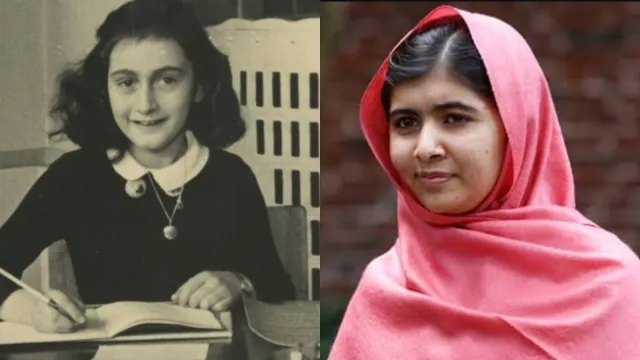
This attack did not happen in isolation. Reports over the preceding three weeks described a dispute at Anand Niketan School in Shilaj, which began with a canteen complaint in mid-August. This escalated into a campaign led by parents and activists from the Bajrang Dal and Vishwa Hindu Parishad (VHP) against two books that were recommended to be part of the students’ reading list: I Am Malala and The Diary of a Young Girl (The Diary of Anne Frank). According to a statement released by the students’ collective at the time, the same campaign pressured the school against the admission of Muslim students and appointment of Muslim teachers, as well as the school’s prayer policy. The intimidation and coercion that this campaign unleashed forced the school to withdraw both the books, make morning prayers compulsory, and even to remove four staff members.
The silent reading session organized by the Student and Youth Collective, Ahmedabad in the Vastrapur AUDA Garden was a silent, non-violent protest against the intimidation of the management of an educational institution and the punitive action taken against the school for encouraging its students to read.
The Assault
According to media reports and written complaints by the complainants, around 50 people had gathered from 4:00 PM to read silently. There were no banners, no slogans, and no speeches. The books on hand, aside from the two at the centre of the school dispute, included works on Bhagat Singh, Gandhi, and Ambedkar. At around 5:15 PM, a man aggressively questioned the group about their activities, identified himself as a member of the Bajrang Dal, observed them for a while, and left. At approximately 6 PM, a mob of 45 to 50 men wearing saffron gamchas and carrying sticks, baseball bats, and iron rods entered the garden. Members of the mob identified themselves as belonging to the Bajrang Dal and VHP. The complaint explicitly names two individuals: Hiren Rabari and Jimit Rabari. It states that Jimit Rabari positioned himself at the garden’s gate to coordinate the mob’s movement, while Hiren Rabari directed the actual assault. The mob raised slogans of “Jai Shri Ram,” called the readers “terrorists,” and demanded in Hindi that people’s pants be pulled down to check whether they were Muslim. When members of the group pointed out that they were also reading books on Bhagat Singh, Ambedkar, and Nehru, the mob refused to listen. Jai Kumar Thakkar suggested singing the national anthem to calm the situation, and the group did so, standing, in full. The complaint states that the moment the anthem ended, Hiren Rabari turned to the mob and shouted, “These people are defaming the country,” after which the beating commenced immediately. Jai Kumar Thakkar was dragged out of the garden and beaten with sticks, a baseball bat, fists, and kicks to the head, stomach, back, legs, and left elbow. Sneh Bhavsar was struck with the same weapons on the head, left hand, both legs, elbow, and back. Shashi Kumar was beaten repeatedly with a stick on the forehead, eyes, jaw, and back while being forced into a police vehicle; a police officer’s hand was also struck during this assault. Savan Zalariya was slapped hard enough to break his glasses, then beaten with sticks and a bat on the head, waist, and left ankle. Repeated blows with blunt weapons to the head carry an inherent risk of grievous, permanently disabling, or fatal injury. This is precisely the threshold that Sections 117 and 118 of the Bharatiya Nyaya Sanhita (BNS) are designed to address. This was not a minor scuffle; it was sustained, blunt-force violence to vulnerable parts of the body that could easily have resulted in death.
Women in the group were actively targeted. Swati Goswami’s arm was forcibly grabbed, and her hair was violently pulled in a manner the complaint describes as a violation of her modesty and dignity. Maitreyi Chhaya was repeatedly slapped on the back by several mob members. Aadhya Chhatrola, who was recording the attack on her phone, was surrounded and threatened. The mob told her they would make her disappear so that no one could find her, and one attacker specifically pursued her to snatch the phone from her hands before she managed to escape. This account is corroborated independently by SYCA’s contemporaneous statement, which records the same threat, describes a mob member attempting to seize her phone by force, and notes a police officer telling the group being placed into the van, “We do not know with these people, they can even kill you”—a direct acknowledgement from law enforcement on the scene of the lethal risk the mob posed.
The mob continued its attack even after the police arrived, and as the 3 constables tried to protect the young persons who were being attacked, the mob surrounded one constable and assaulted him too. It was with great difficulty that the victims were pushed into the car and taken away from the crime scene to the Vastrapur police station.
All six complainants were taken to Sola Civil Hospital for treatment. The complainants noted that weapons left behind at the scene were handed over to the police, and they requested that CCTV footage from AUDA Garden, the nearby Kasa Vyoma building, and an Amul parlour be secured to confirm the sequence of events.
Pre-meditated, Organized, Hate Crime
Several details in the complainants’ account point to a premeditated attack rather than a spontaneous confrontation. The mob arrived armed with lathis, thick wooden rods (Dhokos) and iron rods, more than an hour after an individual (who introduced himself as a BD member) had loitered around for a while aggressively questioning the group about their activities. He identified himself as a member of the Bajrang Dal, observed the silent reading for a while, saw the collection of books that were kept on display on one of the benches, and left. Jimit Rabari’s positioning at the garden’s exit gate is indicative of someone managing entry and exit, not someone drawn into a sudden argument. The violence did not fade when the student and youth attempted to defuse it; it resumed immediately after the national anthem on a cue shouted out by Hiren Rabari. Furthermore, the specific demand to forcibly verify people’s religion demonstrates that the mob had already decided their targets before arriving.
The hateful language they were using for the protestors such as ‘anti-nationals’, and ‘terrorists;, as well as the loud statement by one of the leaders of the mob to pull down the trousers to check if the protestors were Muslim – all point towards extreme hatred. The build up of the violence was reminiscent of a mob-lynching scenario; the mob surrounding the young protestors and assaulting and battering them…
Taken together, this evidence points to an assembly that arrived at the garden with the express intent to cause physical harm and intimidate citizens from holding or attending similar readings in the future. This is consistent with the specific threat made to the young woman documenting the incident.
Discrepancies in the FIR
Vastrapur police registered FIR No. 11191020260278 at 00:40 on 28 August, citing BNS Sections 189(1), 190, 191(2), 191(3), 115(2), and 351(2). When compared against the written complaint it is based on, the FIR narrative differs in critical ways:
- Dilution of Accused Roles: The two men specifically named in the complaint, along with their organisational affiliations and distinct roles in the attack, appear in the FIR vaguely as individuals “present with the mob.” The complaint described their exact actions. This is not a minor clerical error; it changes the trajectory of the investigation from pursuing specific suspects to keeping them deliberately unidentified.
- Minimised Mob Size: The FIR’s narrative puts the mob at “about eighteen” individuals, directly contradicting the 45 to 50 described in the complaint. More than half of the alleged mob has been erased from the official record before any investigation has begun.
- Omission of Communal Motive: The communal character of the attack is entirely absent from the FIR. It omits the involvement of the Bajrang Dal and VHP, the religious sloganeering, the “terrorist” accusations, and the demand to forcibly check people’s religion. It also leaves out the national anthem episode, which serves as the clearest evidence that the assault was deliberate rather than provoked. Removing these details strips the incident of its true nature as a targeted, communally motivated attack.
- Inadequate Application of the Law: The BNS sections applied do not match the severity of the events, even within the FIR’s limited narrative:
- The FIR relies on Section 115(2) BNS (voluntarily causing hurt), which carries a maximum penalty of one year and is bailable. However, the injuries required hospital treatment and were inflicted with baseball bats and iron rods. Section 118 BNS (voluntarily causing hurt or grievous hurt by dangerous weapons) carries up to three years for hurt and up to ten years or life imprisonment for grievous hurt, and is non-bailable. On the facts presented, Section 118 is the appropriate charge.
- Nothing in the FIR reflects Section 74 BNS (assault or criminal force to a woman with intent to outrage her modesty), even though the account of Swati Goswami being grabbed and having her hair pulled aligns perfectly with the language of this section.
- Nothing reflects Section 117 BNS (voluntarily causing grievous hurt). Specifically, subsection (4) applies when a group of five or more persons acting in concert causes grievous hurt on grounds of religion, caste, or community. This perfectly matches the complainants’ account of a 45-to-50-person mob acting together, demanding to check people’s religion, and hospitalising four individuals.
- Nothing reflects Section 121 BNS (voluntarily causing hurt to deter a public servant from duty), despite the complaint explicitly stating that a police officer’s hand was struck while the mob continued its assault in the officer’s presence.
- Nothing reflects Section 78 BNS (stalking), although the sequence described fits the legal definition: a man scouted the group at 5:15 PM, observed them, and left, before returning with a mob. Furthermore, Aadhya Chhatrola was pursued by a man attempting to seize her phone after she had made her lack of consent unmistakable by screaming and pulling away.
None of this requires reading anything into the FIR that is not there. It only requires reading the FIR against the complaint it was supposed to accurately record. We do not believe this FIR is an isolated clerical error. The attack occurred at the culmination of a three-week public campaign by the same two organisations against the same two books in the city’s schools. Vastrapur police were not confronting an unpredictable group; they were policing a location that a widely reported, citywide dispute had already marked as a likely flashpoint.
An FIR that responds to a planned, armed, and communally motivated attack by recording named accused as unidentified, halving the reported mob size, erasing the communal motive, and applying the lightest possible legal sections is not simply careless. It fits a long-standing pattern regarding policing in Gujarat and elsewhere in India: using an FIR to blunt accountability for politically favoured groups rather than investigating them thoroughly.
Demands
- We ask the Vastrapur police and the Ahmedabad Police Commissionerate to:
Amend the FIR to reflect the complaint’s full account, including the communal
sloganeering, the demand to forcibly verify religion, and the national anthem episode. - Treat Hiren Rabari and Jimit Rabari as main culprits.
- Apply the correct legal charges, specifically examining the evidence on record against Sections 118, 117, 121, 74, and 78 of the BNS, rather than confining the case to Sections 115(2) and 351(2).
- Immediately secure CCTV footage from AUDA Garden, the Kasa Vyoma building, and the nearby Amul parlour before the data is overwritten.
- Send the surrendered weapons for forensic and fingerprint examination without delay, as requested by the complainants.
- Provide police protection to Aadhya Chhatrola and the other complainants, given the specific and credible threats made against them.
- Complete the investigation within a fixed, publicly stated timeframe, given the size of the mob and the risk of repeat incidents at future gatherings.
We also urge the Gujarat State Human Rights Commission and the Director General of Police, Gujarat, to call for a status report on this FIR, given the glaring gap between what was reported by victims and what was officially registered.
The right to sit in a public garden and read a book is sacrosanct. People were hospitalized, women were assaulted, and a young woman was threatened with disappearance for filming a crime. This did not happen because anyone at the reading broke the law, but because of the books in their hands and the religion the mob suspected they belonged to. A national anthem sung to calm a mob was answered with more violence, not less. PUCL Gujarat will closely monitor this case and expects the police to correct the record before this diluted version of events hardens into the official history.
Sincerely,
Mujahid Nafees
General Secretary, PUCL Gujarat