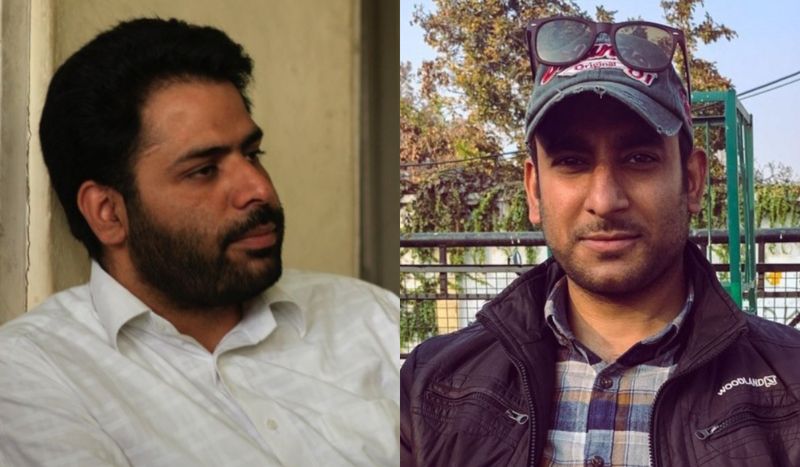
PUCL welcomes the release of Khurram Parvez and Irfan Mehraz on bail
PUCL condemns the continuing suppression of human rights in Kashmir as well as in Ladakh using laws such as the UAPA
UAPA being a law which targets the right to speech, assembly and association must be repealed.
PUCL welcomes the release of Khurram Parvez and Irfan Mehraz on bail by an order of the Sessions Court subsequently upheld by the Delhi High Court. Even as the PUCL welcomes this order it should however be noted that Khurram Parvez was arrested in 2021 and Irfran Mehraz were arrested in 2023 and they have both been in jail since their arrests. This unconscionably long detention only strengthens the argument of the PUCL that the UAPA is functioning as a de facto preventive detention law, completely at odds with the constitutional protection of speech, association and assembly and therefore has no place in a constitutional democracy.
The case against them was under the UAPA and pertained to Sections 17 (raising funds for terrorist act), 18( Conspiracy to commit a terrorist act), 22 A (offence by persons in charge of Company), 22 C (punishment for offences by person in charge of Trust or society), 38( membership of terrorist organisation, 39 (support to terrorist organisation), 40 (raising funds for terrorist organisation. They were also charged with Sections 124-A (sedition) and 120B ( conspiracy) of the IPC.
As per the prosecution both Khurram and Irfan were charged with promoting ‘the secessionist agenda and waging a disinformation campaign in furtherance of the interest of the proscribed terror organization’, namely the JKCCS which was described as an ‘unregistered NGO.’ The prosecution also alleged that Khurram Parvez ‘organized and participated in various secessionist programs, events, authored, published and disseminated false, misleading and one-sided reports and narratives with the object of creating, sustaining and spreading disaffection and hatred against the Indian State.’
The Sessions Court had recorded the argument of the counsel for the defence who had contended that, ‘JKCCS is not a banned organization till date. There is no allegation that accused incited any violence, the allegation against the accused is that he managed to bring people of different ideology on one platform to discuss and debate and not to kill or to be killed. He had further argued that, the ‘accused is a non-violent person who believes in resolving the deep-rooted conflict m his society through dialogue. This discussion is nothing but a non-violent political discussion, nowhere close to any offence especially under UAPA.’
The prosecution also argued that the human rights reports put out by JKCCS, namely ‘Alleged Perpetrators’ and ‘Structure of violence’ were done with the ‘intention of creating disaffection against the government’ as well as disclosed sensitive data regarding the army, The defence responded that both reports were ‘till date publicly available on the official website of JKCCS’. The defence also argued that the report titled ‘Alleged Perpetrators’, was ‘shared with Indian Army, which gave a public response to the same in the newspaper Kashmir Tribune on 12.12.2012’.
While there was no finding with respect to JKCCS by the Court, the PUCL would like to reiterate that the JKCCS, was a civil society organisation whose work was well respected both nationally and internationally. Their six monthly and annual reports on HR violations in J&K was objective, giving data of all sides, including combatants, civilians and the Indian Army. Their report, ‘Alleged perpetrators’, ‘portrays the state of impunity prevalent in Jammu and Kashmir’ and seeks ‘accountability for institutional criminality.’
The PUCL in a previous statement on the arrest of Irfan Mehtez had noted that, ‘this particular action of targeting human rights work of documenting, reporting and publicizing how the Indian state has violated its commitments to `rule of law’, constitutional principles and human rights, is of grave concern to all those concerned about the future of constitutional democracy itself. The work of documenting human rights violations by civil society groups such as the JKCCS is an essential part of the right to free speech.’
Even as the Sessions Court did not come to any finding regarding the arguments of the defence and the prosecution, it based its order on an observation of the Delhi High Court regarding similar facts in which Khurram Parvez had been enlarged on bail. The Delhi High Court in that case had observed that, ‘The appellants rights under Article 21 of the Constitution of India need to be balanced and may even trump the restriction imposed under Section 43D(5) of the UAPA.’
The Court held that, ‘ it is amply clear that the allegation attributed by the NIA against accused Khurram Parvez (A- l ) in this case are mainly based upon testimony of oral witnesses, whose authenticity shall be tested during the trial. The accused is in custody since 22.03.2023 and there is no possibility of completion of trial of this case in near future, as charges against the accused persons have not yet been framed . Moreover, the Hon’ble High Court has granted bail to the accused in RC No . 30/2021 , in which some what similar allegations have been attributed against the accused and also held that accused is infirm and deserves that special consideration.’
Even as the Delhi High Court upheld the order of the Sessions Court, it imposed even more stringent bail conditions. Thus both Irfan and Khurram are confined to Delhi and have to report to the NIA Headquarter every Tuesday and Friday. They are also prohibited from ‘participating in any programme relating to the pending case and circulating any ‘post, literature in any form’.
The bail conditions aim at nothing less than the complete stifling of speech of both parties who are writers by profession. The fact that they cannot go back to Kashmir and they have to report to the police station twice a week, make it extraordinary difficult to take forward a career or profession.
The PUCL contends that these harsh conditions on bail make a mockery of the constitutional protection of the right to speech and expression under Article 19(1)(a), the right to move freely throughout the territory of India under Article 19(1) (d), the right to reside and settle in any part of the territory of India under 19(1)(e) and the right to practice any trade or profession under Article 19(1)(g).
This bail order comes just a bit short of the seventh anniversary of the demotion of J and K from state to a union territory and the abrogation of Article 370. In the last seven years Kashmir has witnessed a deterioration of the human rights situation. Emblematic of this is the development of a carceral state. As Dr Mubeen Ahmed Shah in a recent article in the Kashmir Times, has argued that Kashmir has been institutionally transformed into a carceral state by using ‘preventive detention, counterterrorism laws, surveillance, administrative restrictions, and the transfer of detainees to prisons located hundreds of kilometres away from their homes.’
What brings home , how prison has become the go to option in Kashmir for authorities dealing with a people they are striving to control are the shocking figures of arrest under the UAPA. Between 2019 and 2023, Jammu and Kashmir accounted for 3,662 arrests under the Unlawful Activities (Prevention) Act (UAPA), representing roughly 35 percent of all UAPA arrests in India. In 2023 alone, the region recorded 1,206 such arrests, amounting to nearly 42 percent of all UAPA arrests across the country, despite constituting only a small fraction of India’s population.
It’s not just Kashmir which has suffered repression post abrogation. Post abrogation, the people of Ladakh have also been brutally suppressed when they put forward their legitimate demands. The people of Ladakh have been agitating for the recognition of their political rights, both to statehood as well as VIth Schedule status. Sonam Wangchuk who was detained under the National Security Act for 170 days emerged as a symbol of state intolerance of democratic dissent. This agitation has been sought to be suppressed by brutal repression as well. The PUCL condemns the continuing suppression of human rights in Kashmir as well as in Ladakh.
The Indian Government cannot suppress a people through brute force, but must listen to the demands of the people and begin dialogue with them so that they can be redressed within the framework of the Constitution.
The PUCL demands that:
1) The cases under the UAPA targeting Khurram Parvez, Irfan Mehraz as well as other journalists and activists be withdrawn
2) The right to speech, association and assembly of the people of Ladakh and Kashmir be respected.
3) The UAPA being a law which targets the right to speech, assembly and association must be repealed.
4) The architecture of the carceral state which includes preventive detention, surveillance and administrative restrictions be dismantled.
5) The democratic demands of the people of Kashmir and Ladakh must be heard and responded to.