PUCL demands the immediate removal of the Chief Election Commissioner and the restoration of all deleted names in the SIR!
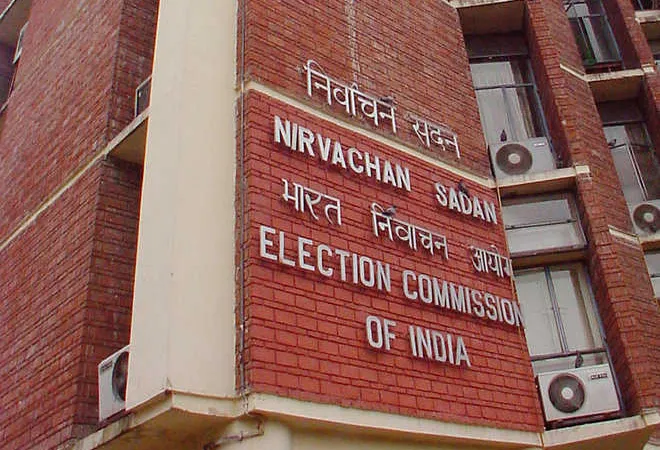
An investigation published on 23rd September by The Indian Express has confirmed what opposition parties and civil society groups have alleged for over a year: the Special Intensive Revision of electoral rolls, the largest and most consequential overhaul of India’s voter lists in independent history, is not a technical exercise meant to update the electoral roll but rather a political exercise meant to benefit the party in power.
The consequential changes proposed by the ECI were rushed through without even conforming to the process of decision making within the ECI itself. Two of the Commission’s three members, Election Commissioners Sukhbir Singh Sandhu and Vivek Joshi, formally objected at least 14 times over 10 months to decisions and orders on the SIR that they said were issued without their knowledge. These included matters as fundamental as new voter registration, the deletion and restoration of names, the process for hearing appeals, and the custody of the electoral database itself.
Thus the body constitutionally entrusted with the integrity of Indian elections has, by the account of two of its own three members, been functioning without their consent on the single largest exercise it has ever undertaken. The institutional integrity of the Commission, stands compromised as the Commission in effect functioned as per the wishes of Gyanesh Kumar. The Chief Election Commissioner, who was appointed under the sole authority of the Prime Minister and the Home Minister has in effect acted at their behest. The ECI has pushed through the deletion of 13 crore names which is around the population of Mexico or a little more than the entire population of Maharashtra! This exercise in mass disenfranchisement of crores of Indians should be the basis for a direct political demand: Chief Election Commissioner Gyanesh Kumar must be impeached for this grave and criminal dereliction of his constitutional responsibility. The SIR which has proved itself to be an entirely illegitimate exercise must be scrapped.
When the Commission moved to alter Form 6, the statutory form citizens use to register as new voters, Joshi warned that the SIR was being conducted only as a “one time measure and exception” under Section 21(3) of the Representation of the People Act, and that the prescribed forms could not be changed without formally amending the Registration of Electors Rules, 1960. He recommended the change instead be routed through the union government. The Commission went ahead with the change regardless.
Joshi separately raised concerns about the “gradual centralisation” of the electoral-roll database and sought an audit of who was authorised to alter voter records. Both Commissioners took their concerns over control of the Commission’s IT infrastructure directly to the Cabinet Secretary, bypassing the Chief Election Commissioner. All these concerns were ignored.
The law is unambiguous about why this matters. Under Section 18 of the Chief Election Commissioner and Other Election Commissioners Act, 2023, decisions of the Commission are meant to be taken unanimously as far as possible and if not by majority. This structure of decision making within the Commission exists precisely to prevent one officer from overriding the other two in the functioning of the Election Commission.
The ECI’s response to these allegations is to brazen it out by publicly rejecting the allegations and maintaining that its SIR decisions were unanimous. If two of three Commissioners are on record saying they were bypassed repeatedly on decisions regarding the single largest disenfranchisement exercise in India, the Commission’s own claim to unanimity can only be an untruth. One question however still hangs over this episode: why did Sukhbir Singh Sandhu and Vivek Joshi stay silent for so long? Their objections were recorded over ten months, while the damage kept mounting and civil society and opposition parties raised concern after concern. Their dissent, now public, cannot be papered over. We hope they have the courage of their convictions and unequivocally stand by the concerns they raised and demand that every objection they raised be formally addressed.
The implications of this explosive expose have serious implications for the world’s largest democracy. Rolled out in three phases first in Bihar in 2025, then nine states and three Union Territories, and now the current Phase 3 covering 16 more states and three UTs. The SIR has now touched nearly every part of the country except Himachal Pradesh, Jammu & Kashmir and Ladakh. More than 13 crore names have been deleted from voter lists across the three phases so far.
Bihar’s draft rolls alone excluded over 65 lakh people, a number the ECI initially argued it had no obligation to even publish, before the Supreme Court ordered it to do so. West Bengal’s Phase 2 revision deleted 58.2 lakh names outright and separately flagged over 1.2 crore voters for unexplained “logical discrepancies”, a category the Commission itself, in response to an RTI application, said it could not define. By Phase 3, states were applying up to eleven different, uncoordinated criteria for what accounted for a ‘logical discrepancy’, with no published standard operating procedure from the Commission. Delhi alone has lost nearly 48 lakh voters, 32.78% of its electorate, the steepest proportional cut recorded anywhere in the country so far.
These deletions have concentrated on migrant workers whose addresses change with employment, on women whose names shift across records through marriage, on transgender citizens whose documents are frequently out of step with what the database expects, and on Dalit and Adivasi households who rarely possess the documents required by SIR. In West Bengal, exclusion from the rolls has already been used as grounds to deactivate ration cards for people the state marked “dead” or “shifted”, stripping food entitlements from citizens who remain very much alive, in a scheme serving close to 90 million people.
Elections in four states, Bihar, West Bengal, Tamil Nadu and Kerala, and the Union Territory of Puducherry have already been held on these very suspect rolls, which puts both their integrity and the results in question. In fact, petitioners argued that in at least 31 constituencies of West Bengal the margin of victory was smaller than the number of disputed deletions. In one, the losing candidate fell short by 862 votes while 5,550 appeals by deleted voters remained under challenge.
Unfortunately this entire process of disenfranchisement has unfolded under the aegis of the Supreme Court. In ADR v ECI, the Court has upheld the validity of the SIR In Bihar, inspite of the evidence of disenfranchisement. Just as the Supreme Court betrayed the promise of the Constitution in ADM Jabalpur (1976) by stripping individuals of judicial recourse when detained during the emergency, the Supreme Court in ADR v ECI (2026) lays waste to one of the key goals of the Constitution so eloquently described by Babasaheb Ambedkar, ‘In politics we will be recognizing the principle of one man, one vote and one vote, one value.’ While ADM Jabalpur was limited to the context of the emergency, the decision in ADR v ECI sets the seal of the Supreme Court on the betrayal of the promise of political equality, for all time.
The Court’s failure is even more stark when compared to its historical role in safeguarding Indian democracy. It was in ‘Anoop Baranwal v Union of India’ (2023) that the Court had laid down an important safeguard to preserve the independence of the ECI. The appointment of the Chief Election Commissioner and the Election Commissioners, shall be on the advice of a Committee consisting of the Prime Minister, the Leader of the Opposition of the Lok Sabha and the Chief Justice of India. However the Modi government passed a law nullifying the judgement of the Supreme Court and removing the Chief Justice from the Selection Committee and replacing him with a Union Cabinet Minister. It was after the passing of this law that the three election commissioners were appointed.
Gyanesh Kumar is a direct beneficiary of this process of appointment and has since then run the ECI as a political appointee of the ruling party. He has bypassed the statutory requirement for unanimity or majority decision-making among the three Commissioners.This has resulted in arbitrary decision making the consequence of which is the disenfranchisement of 13 crore Indians.
The Court now has an opportunity to begin to make institutional amends. The Supreme Court delivered a split verdict on 23rd September, in a case challenging the mode of appointment of the Election Commissioners In this judgment a split verdict was delivered with Justice Dipankar Datta holding that, “It is far-fetched to expect that a minister who is part of Cabinet of Ministers would adopt a stand disagreeing with leader or government. Inclusion of cabinet ministers fails to provide an independent counterweight that a neutral selector would.” One hopes that the opinion of Justice Datta will become the opinion of the Court when the matter is heard by a larger Bench.
While the Court has to play its role in ensuring that the process of appointment is fair, as of now impeachment proceedings must be initiated against Gyanesh Kumar and Parliament should demand a full, transparent accounting through a joint parliamentary committee if necessary of every decision the two dissenting Commissioners say was taken without their consent.
The reason this exercise in voter theft has come out is because the Indian Express has played its role as a watchdog institution, and the much vaunted fourth pillar of democracy. This is a welcome development at a time when mainstream media have chosen proximity to power over independence from it. One hopes that this does not remain a straw in the wind and more and more media outlets feel empowered to perform their constitutional role as watchdogs of democracy.
The right to vote was meant to be the one place where every citizen, regardless of caste, class, gender or geography, stood as an equal. An exercise that has deleted over 13 crore names, concentrated its damage on those least able to fight back, and is a direct assault on the norm of equality.
The PUCL demands that
- Initiate removal proceedings against CEC Gyanesh Kumar
- Suspend all further SIR phases and restore the pre-SIR rolls as the operative rolls, wherever SIR has been conducted.
- Make public every objection recorded by Election Commissioners Sandhu and Joshi, and every order and decision on the SIR, along with minutes, with the record of who took part in each decision
- Constitute a Joint Parliamentary Committee to account for every SIR decision taken without the consent of the dissenting Commissioners, with power to summon records.
- Restore the Form 6, and withdraw amendments and all other procedural changes made without amending the Registration of Electors Rules, 1960
- Restore all names deleted in the SIR. Any deletion from electoral rolls must abide by the Section 21A of the RER, with the burden of proof on the authority. This must also render all government orders or circulars connecting deletions to ration entitlements and welfare schemes irrelevant.
- Order an independent audit of every alteration made to the database during the SIR, showing who authorised and who executed each change.
- Supreme Court to take suo motu cognisance of the Indian Express report and the concerns it raises. The Court should re-examine the SIR’s validity and the independence and integrity with which the ECI has functioned in light of this new material.
- The Court must also acknowledge the impact of the SIR on the recent state elections and direct that they must be declared void.
- All efforts to witch-hunt, intimidate and harass people on allegations of being non citizens based on SIR deletions, as it is happening in West Bengal must be stopped.
PUCL calls for all opposition parties and people’s movements to raise their voice and strengthen this demand and work towards defending the integrity of India’s electoral democracy.