PUCL Condemns the Removal of the Film ‘Satluj’ from ZEE5: The Truth About Punjab’s Disappeared Cannot Be Made to Disappear Again
Restore the film and publish the reasons for its removal. Investigate every disappearance and prosecute the guilty, without state protection for the accused. Constitute a Truth and Reconciliation Commission on the Punjab disappearances. Ratify the International Convention against Enforced Disappearance.
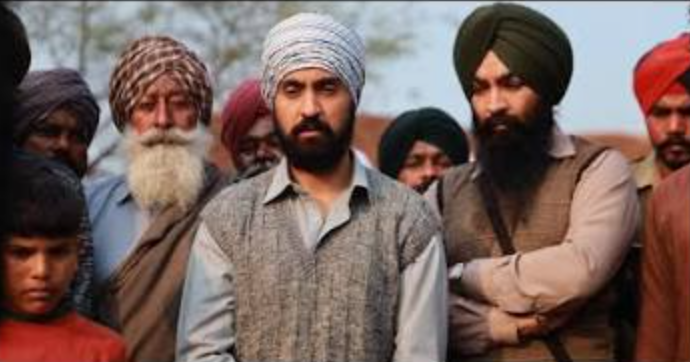
The People’s Union for Civil Liberties (PUCL) strongly condemns the removal of the film Satluj, directed by Honey Trehan and starring Diljit Dosanjh, from the Indian catalogue of the streaming platform ZEE5. The film was released on 3 July 2026 and was pulled down within two days.[1] No order has been published and no reasons have been given to the public. Unnamed officials have told journalists that the film was taken down on ‘security’ grounds, and recent reports say that a committee constituted by the Government has concluded that the film ‘goes against India’s sovereignty’.[2] ZEE5, for its part, has said only that the film will not be available in India ‘until further notice’. In short, a film that was lawfully released has been made to vanish on the strength of an order nobody has seen, for reasons nobody has been told, without the filmmakers being heard. This is not how a government bound by the Constitution may act.
The irony should trouble every citizen. Jaswant Singh Khalra was abducted, tortured and killed in 1995 because he uncovered how thousands of people in Punjab had been made to disappear. Thirty years later, the film that tells his story has itself been made to disappear from Indian screens. The disappeared of Punjab, it appears, must be disappeared twice over, first in their bodies and now in public memory.
Three years of hurdles, then a takedown
The film, originally titled Punjab 95, spent nearly three years before the Central Board of Film Certification. The Board asked for close to 130 cuts and a change of the film’s name before it would clear a theatrical release.[3] The filmmakers refused to mutilate their work and opted for a release on a streaming platform instead. That release lasted two days. Since then, congregations and villagers across Punjab have been holding free community screenings in gurdwara compounds and village halls, and diaspora groups have done the same in London, New York and Toronto.[4] The film has not been stopped. What has been damaged is the credibility of the certification process, and the guarantee of free speech under Article 19(1)(a) of the Constitution, which cannot survive if the executive can quietly achieve through a phone call what the censor board could not achieve through law.
The man who counted the dead
Jaswant Singh Khalra was not a professional activist. He worked in a bank in Amritsar. While looking for a friend who had gone missing, he began examining the registers of municipal cremation grounds. At the Durgiana Mandir cremation ground in Amritsar and the cremation grounds at Patti and Tarn Taran, he found that the Punjab Police had been secretly cremating bodies labelled ‘unclaimed’ and ‘unidentified’ through the years of the counter-insurgency, most intensely between 1990 and 1995. Families were never informed. Post-mortems were not conducted. No record was kept of how these persons had died. From the three cremation grounds he examined, Khalra estimated that across Punjab the number of such secret cremations could be as high as 25,000.[5]
He made his findings public and refused to stop despite direct threats from senior police officers. Speaking at a gurdwara in Canada in April 1995, he told the story of the lamp that defies the darkness: ‘every lamp says, I will fight the darkness, at least around myself.’[6] On 6 September 1995 he was picked up from outside his home in Amritsar by Punjab Police personnel. He was illegally detained, tortured and murdered. His body was never returned to his family. It took the courage of his wife, Paramjit Kaur Khalra, the orders of the Supreme Court and a CBI investigation before six policemen were convicted for his abduction and murder in November 2005. The Punjab and Haryana High Court enhanced the sentences of the main accused to life imprisonment in 2007, and the Supreme Court upheld the convictions in 2011.[7]
How many disappeared? No one in authority has ever counted
The honest answer to the question of how many people disappeared in Punjab is that nobody knows, because the State has never tried to find out. The numbers on record tell their own story. Khalra’s extrapolation was as many as 25,000 secret cremations. The CBI, investigating under the Supreme Court’s directions, verified 2,097 illegal cremations in just the three cremation grounds of one district: 582 bodies fully identified, 278 partially identified and 1,237 never identified at all.[8] The National Human Rights Commission, to which the Supreme Court referred the matter in 1996 with wide powers, limited its inquiry to those same three grounds, awarded about Rs. 27.94 crore as compensation over a decade of proceedings, and did not fix responsibility on a single officer.[9] Those who have gone from village to village have found much more. The Punjab Documentation and Advocacy Project, after fieldwork in over 1,600 villages, has documented more than 8,000 cases of abduction, enforced disappearance, extrajudicial killing and illegal cremation from across the State; 6,733 of these cases are the subject of a writ petition pending before the Punjab and Haryana High Court since November 2019, in which the families seek independent investigation, prosecution and reparation.[10] PUCL urges that this petition, and every other pending matter arising from the disappearances, be heard and decided without further delay. The parents of the disappeared are dying one by one, still waiting for answers.
That the estimates range from two thousand to twenty-five thousand is itself the indictment. A State that made its own citizens disappear never counted them, and it has resisted every attempt by others to count. Behind each disputed number is a person who was taken away, a family that was never told, and a death that was never certified.
Disappearances are an attack on the rule of law itself
An enforced disappearance is not simply a murder concealed. It removes a human being from the protection of the law altogether. There is no arrest memo, no FIR, no body, no death certificate. The writ of habeas corpus, the oldest remedy known to our law, becomes meaningless when the State simply denies custody. The family cannot mourn, cannot inherit, cannot close the account. International law treats enforced disappearance as a continuing offence for precisely this reason: the crime is committed afresh every day the truth is withheld.
The precedent such crimes set is as dangerous as the crimes themselves. If officials can abduct, kill and cremate citizens in secret and face no consequences because the victims were labelled militants and the times were called extraordinary, then every guarantee in Part III of the Constitution is only as good as the government’s mood. Punjab proved the point. The methods perfected there, the unacknowledged detention, the staged encounter, the unclaimed body, travelled to Kashmir, to Manipur and to other theatres of internal conflict. Impunity is never contained within one state or one decade. Each unpunished disappearance teaches the machinery of the State that disappearance works.
What the Supreme Court has laid down
None of this is a grey area in law. In Nilabati Behera v. State of Orissa (1993), the Supreme Court held that the State must answer and pay compensation for a death in custody, and that Article 21 does not abandon a person at the prison gate.[11] In D.K. Basu v. State of West Bengal (1997), the Court laid down binding safeguards for every arrest and detention, precisely because custodial violence thrives on secrecy. In Paramjit Kaur v. State of Punjab, the Court ordered the CBI to investigate Khalra’s abduction and referred the Punjab mass cremations to the NHRC.[12] In People’s Union for Civil Liberties v. Union of India (1997), a petition filed by this organisation concerning fake encounters in Manipur, the Court held in terms that a killing in a fake encounter is nothing but murder, and that administrative liquidation of citizens has no place under our Constitution.[13] In People’s Union for Civil Liberties v. State of Maharashtra (2014), again on a PUCL petition, the Court issued sixteen binding directions to be followed in every case of death caused by police action: registration of an FIR, independent investigation by another agency or police station, magisterial inquiry, information to the family, and no gallantry awards or out-of-turn promotions for the officers concerned until their conduct is cleared. And in Extra Judicial Execution Victim Families Association v. Union of India (2016), which dealt with 1,528 alleged fake encounters in Manipur, the Court held that there is no absolute immunity for police or armed forces personnel, and that every allegation of an extra-judicial killing must be investigated and, where made out, tried as an ordinary crime.
The law, in other words, exists. What has been missing in Punjab, for thirty years, is the will to enforce it.
Prosecute the guilty, and stop protecting them
PUCL demands that every documented case of disappearance and illegal cremation in Punjab be properly investigated by an independent agency, and that criminal prosecution follow wherever the evidence leads, regardless of the rank the accused held then or holds now, and regardless of whether he is serving or retired. Murder does not become stale with time, and there is no limitation period for it.
We must also say plainly what experience has shown: accused policemen in Punjab were not merely spared, they were protected. Officers named in disappearance cases were promoted and decorated, and public funds have been spent on their legal defence. This must stop. A policeman accused of abduction, torture or murder stands accused of a crime against the very public he was paid to protect. He is entitled to a fair trial, but not to the treasury. The State must not extend to such accused persons, whether serving or former policemen, support of any kind, including the funding or conduct of their litigation. Its duty lies on the other side: to assist the prosecution with records, witnesses and sanction. Statutory sanction requirements cannot be allowed to become instruments of shelter, for no abduction, torture or secret cremation can ever be part of ‘official duty’.
Truth and reconciliation: the lesson Punjab has not been allowed to teach
Punjab between the early 1980s and the mid-1990s was a society in conflict. Militant violence took a terrible toll of innocent lives, and the State’s response took another. Societies that have lived through such periods, in Latin America, in South Africa, in our own region, have learnt one lesson at great cost: there is no lasting peace without truth, and no reconciliation without acknowledgment. India has never permitted itself that reckoning over Punjab. The NHRC’s inquiry stopped at the boundary of one district. The courts have moved slowly where they have moved at all. The constitutional machinery, to speak frankly, failed the families of the disappeared, and that failure is one reason the same patterns have recurred in other conflict areas of the country.
PUCL therefore calls for the constitution of a Truth and Reconciliation Commission on the disappearances, custodial killings and secret cremations in Punjab between 1984 and 1995. It should be headed by retired judges of the Supreme Court or the High Courts, include representatives of victims’ families and independent civil society, and be mandated to make a full public accounting of the disappeared, to acknowledge wrong where wrong was done, and to recommend reparation and prosecution. If the State remains unwilling, civil society will have no option but to convene an independent People’s Tribunal to do the work of truth-telling, as citizens’ tribunals in this country have done before. We remind the Government that India signed the International Convention for the Protection of All Persons from Enforced Disappearance in 2007 and has not ratified it to this day, and that Indian law still does not recognise enforced disappearance as a distinct crime.[14]
A film is speech, and this speech is protected
The removal of Satluj cannot be squared with the settled law on free expression. In S. Rangarajan v. P. Jagjivan Ram (1989), the Supreme Court, dealing with a film, held that the State ‘cannot plead its inability to handle the hostile audience problem’ and that the danger anticipated from any expression must be proximate and direct, not remote or fanciful.[15] In Shreya Singhal v. Union of India (2015), the Court held that discussion and advocacy of any cause, however unpopular, lie at the heart of Article 19(1)(a), and that only incitement may be restricted. A film about a man whose killers were convicted by Indian courts, and whose findings were verified by the CBI and acted upon by the Supreme Court, is not incitement against India. It is India examining its own record, which is exactly what a democracy is for. In Anuradha Bhasin v. Union of India (2020), the Court further made it clear that orders restricting fundamental rights must be published so that they can be tested in court. Censorship by anonymous briefing, executed through a private platform, is censorship without accountability.
PUCL has said this before and says it again. In August 2025 we condemned the omnibus forfeiture of twenty-five books on Kashmir as an attempt to erase collective memory. PUCL and PUDR documented the anti-Sikh massacres of November 1984 in Who Are the Guilty? PUCL campaigned for years against TADA and its abuse in Punjab, and raised Jaswant Singh Khalra’s case at every forum available to it.[16] The State’s quarrel with Satluj is the same quarrel it had with those books. It is a quarrel with memory.
PUCL demands
- That Satluj be restored on ZEE5’s Indian platform forthwith, and that any order or direction for its removal, along with the report and composition of the committee said to have examined it, the legal provisions invoked and the reasons recorded, be published immediately.
- That the filmmakers be given a full hearing, and that the CBFC certify the film for theatrical release without the cuts earlier demanded, in accordance with the law laid down by the Supreme Court.
- That community screenings of the film face no interference, intimidation or criminal action.
- That all documented cases of disappearance, custodial killing and illegal cremation in Punjab be investigated by an independent agency in a time-bound manner, and that criminal prosecutions be initiated against the perpetrators, whether serving or retired.
- That no accused official, present or former, receive state support of any kind, including the funding of his legal defence, promotions or awards, and that the State instead actively assist the prosecutions with records, witnesses and sanction.
- That the writ petition pending before the Punjab and Haryana High Court since 2019 concerning 6,733 documented cases, and all allied matters, be heard and decided expeditiously.
- That a Truth and Reconciliation Commission be constituted on the Punjab disappearances of 1984 to 1995, failing which civil society will be compelled to convene an independent People’s Tribunal.
- That India ratify the International Convention for the Protection of All Persons from Enforced Disappearance and enact a law making enforced disappearance a distinct criminal offence.
Kavita Srivastava, President
Dr. V. Suresh, General Secretary
People’s Union for Civil Liberties (PUCL)
PUCL National Office: 332, Ground Floor, Patpar Ganj, Opposite Anand Lok Apartments (Gate No. 2), Mayur Vihar-I, Delhi 110091 | puclnat@gmail.com
Notes
- Variety, ‘Diljit Dosanjh’s “Satluj” Pulled From India by ZEE5’, 5 July 2026; Forbes, ‘Diljit Dosanjh’s Controversial Film “Satluj” Pulled From India in Two Days’, 5 July 2026.
- Al Jazeera, ‘Why is India blocking film on a man who counted Punjab insurgency killings?’, 14 July 2026; Press Trust of India reports, July 2026.
- Al Jazeera, ibid.
- Al Jazeera, ibid.; Associated Press reports of community screenings, Gurdaspur district, 8 July 2026.
- Human Rights Watch and Ensaaf, ‘Protecting the Killers: A Policy of Impunity in Punjab, India’ (October 2007).
- Address of Jaswant Singh Khalra at a gurdwara in Ontario, Canada, April 1995.
- Judgment of the Sessions Court, Patiala, November 2005; Punjab and Haryana High Court, October 2007; upheld by the Supreme Court of India, 2011.
- CBI reports submitted to the National Human Rights Commission; see ‘Protecting the Killers’ (2007), note 5 above.
- Proceedings of the NHRC in the Punjab Mass Cremations Case, arising out of Paramjit Kaur v. State of Punjab.
- The Caravan, ‘HC petition demands enquiry into 6,733 disappearances, illegal cremations in Punjab’, November 2019; Punjab Documentation and Advocacy Project, punjabdisappeared.org.
- Nilabati Behera v. State of Orissa, (1993) 2 SCC 746; D.K. Basu v. State of West Bengal, (1997) 1 SCC 416.
- Paramjit Kaur v. State of Punjab, (1996) 7 SCC 20; (1999) 2 SCC 131.
- People’s Union for Civil Liberties v. Union of India, (1997) 3 SCC 433; People’s Union for Civil Liberties v. State of Maharashtra, (2014) 10 SCC 635; Extra Judicial Execution Victim Families Association v. Union of India, (2016) 14 SCC 578.
- International Convention for the Protection of All Persons from Enforced Disappearance, adopted 20 December 2006; signed by India on 6 February 2007, not ratified.
- S. Rangarajan v. P. Jagjivan Ram, (1989) 2 SCC 574; Shreya Singhal v. Union of India, (2015) 5 SCC 1; Anuradha Bhasin v. Union of India, (2020) 3 SCC 637.
- PUCL, ‘Response to the banning and forfeiture of 25 books by J&K Government’, 12 August 2025, pucl.org; PUCL and PUDR, ‘Who Are the Guilty?’ (1984).