Democratization of Land & Resource Governance to protect communities engaged in subsistence customary livelihoods from rampant land grab
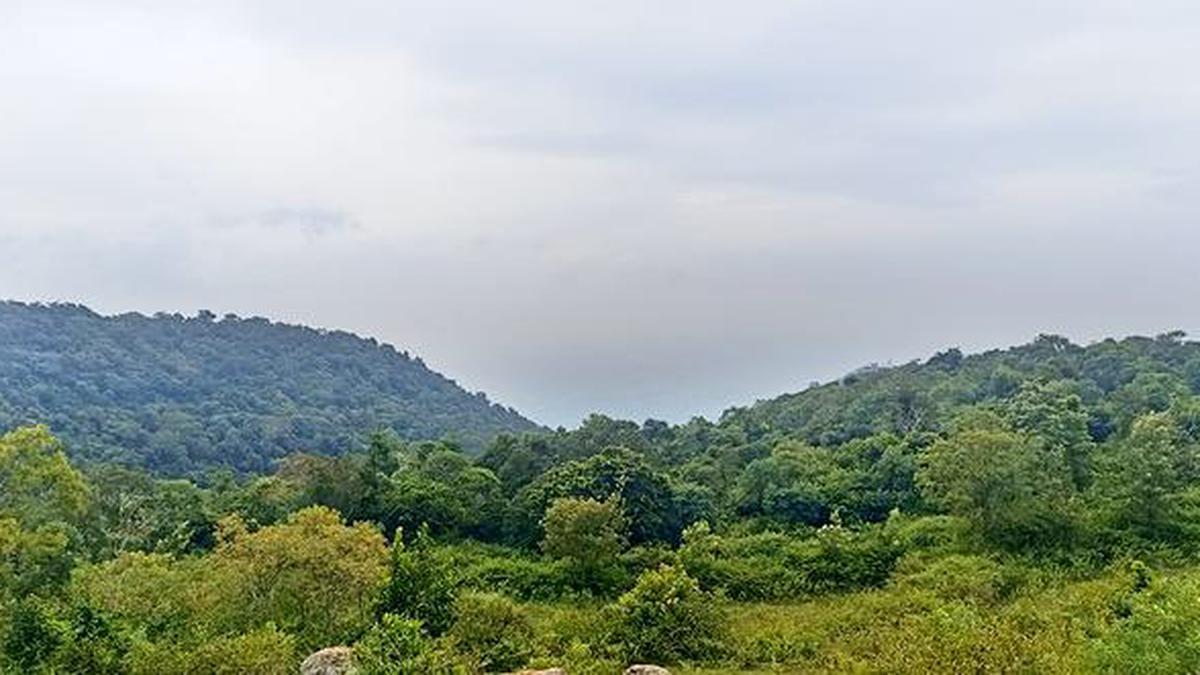
The last frontiers of natural wealth of Tamil Nadu – which include its hills, forests and scrub lands, coastal waters and lands, sand dunes, salt pans and brackish water ecologies, agricultural fields, tanks, ponds, canals and other wetlands, grazing and other commons – are under severe threat from large-scale land monetization, extraction and environmental destruction. This involves the forcible removal of communities, whose customary livelihoods in forestry, fishing, farming, pastoral and craft and cottage industry have continuously sustained countless generations from time immemorial, while at the same time, preparing, nurturing, protecting, conserving and reproducing these landscapes and their ecologies for their subsistence needs and the greater common good. Concrete action is urgently required to halt and reverse this widespread and accelerating land and resource grab, denying and crushing their democratic and customary rights and resulting in coercive displacement and extensive violence and destitution, besides environmental collapse and ecocide.
These landscapes include 26.35 lakh hectares of forests, 9.03 lakh hectares of wetlands, 5-6 lakh hectares of village commons (of which 1.08-1.11 lakh hectares are permanent pastures and grass lands), and 4.50 lakh hectares of coastal lands, besides 47,501 sq. km of territorial and contiguous waters along a 1,068.69 km coastline. Excluding coastal waters, these account for about 35% of the total geographical area of the State. These landscapes have been traditionally managed by communities whose customary livelihoods are deeply intertwined with the health of these ecologies. Therefore, these communities are best positioned to protect, conserve and sustainably manage their customary landscapes and ecosystems by deploying their accumulated expertise and wisdom. They are 29% of Tamil Nadu’s workers who are engaged in agriculture, forestry, fishing and pastoral activity as a primary occupation, and a further 18% in construction who may be seasonally engaged in agriculture and animal husbandry. These vast numbers inhabit some 79,395 hamlets in 12,525 village panchayats across Tamil Nadu: a potential force for democratization on a scale hitherto unimagined.
FORESTS & FOREST RIGHTS ACT 2006
The Forest Rights Act 2006 (FRA), a flagship governance law, recognised and vested forest rights – both individual and community rights – on Scheduled Tribes and Other Traditional Forest Dwellers. The habitation-level village Gram Sabha determines, demarcates, verifies and approves the vested forest rights. FRA introduced village self-rule and self-governance over the forest lands empowering the Gram Sabhas to protect, conserve, and manage forests, wildlife and biodiversity, making it the premier forest conservation and governance law in the country. Tamil Nadu is one of the most laggard states in FRA implementation due to the resistance of the forest bureaucracy compounded by the apathy of the Tribal Welfare department – the nodal agency for the law – and the Revenue department.
• With the Panchayats defunct since January 2025 except in some districts, the Sub-Divisional and District Level Committees under FRA who are to process, recognise and title the Gram Sabha approved forest rights claims, are also defunct as 3 of the 6 members forming each committee are to be nominated from among those elected to the District Panchayats. This has prevented the processing of Gram Sabha approved claims from 2025 and renders the titles issued post-term of the Panchayats, legally questionable. Hold panchayat elections and reconstitute the Sub-Divisional and District Level Committees under FRA immediately.
• Even as rights recognition continues to be denied, the National Tiger Conservation Authority (NTCA) asked the Tamil Nadu Forest Department on 19 June 2024 to speed up the ‘relocation’ of some 4,701 families in 63 villages in 5 Tiger Reserves. Some 614 families in 6 villages have been illegally ‘relocated’ from Mudumalai Tiger Reserve so far. Leave alone rehabilitation, even the monetary compensation due to them was looted by a gang that includes forest officials, for which FIRs have been filed under the Prevention of Atrocities Act 1989. Moreover, all the 5 Tiger Reserves in question, were themselves notified violating the relevant provisions of the Wildlife Protection Act, 1972. Ensure that all the forest rights are recognised in these villages immediately, and any relocation is strictly voluntary, fulfilling all relevant provisions under the Right to Fair Compensation and Transparency in Land Acquisition, Rehabilitation and Resettlement Act, 2013 (LARR 2013).
• Evictions of so-called ‘encroachers’ are pursued despite FRA prohibiting any eviction of Scheduled Tribe & Other Traditional Forest Dwellers dependent on the forests, pending finalisation of FRA claims by the District Level Committee, in order to determine whether the claimant is an ‘encroacher’ or not. A number of Madras High Court orders directing the eviction of ‘encroachers’ ignores this, notwithstanding the Supreme Court order of February 2019 keeping on hold the eviction of rejected FRA claimants. The Supreme Court itself is guilty of ignoring the extant law, as demonstrated in its 29 May 2026 order on the Manjolai case, accepting the legally untenable figures on ‘encroachers’ provided by the Forest Department to the Centrally Empowered Committee and converting the latter’s recommendations to directions issued by the Court. This will lead to the eviction of at least 4,595 people and the removal of government public facilities from the concerned areas within 6 months. State Level Monitoring Committee under FRA should direct the Forest Department that ‘no forest dweller shall be evicted or removed from forest land under his occupation until the recognition and verification procedure as per FRA is complete’.
• The Global Environment Facility’s (GEF) 2025-30 project grant of USD 4.88 million for ‘Strengthening Institutional Capacities for Securing Biodiversity Conservation Commitments’, has been operationalised over 173,260 hectares in Mudumalai and Sathyamangalam Tiger Reserves and Wildlife Sanctuaries (besides in three Protected Areas of Meghalaya), most of which – if not all – falls within the purview of the FRA. The project is designed to empower the Biodiversity Management Committees constituted by the Tamil Nadu State Biodiversity Board with the Forest Department in overall control. But as the habitation-level Gram Sabha is the statutory authority to protect, conserve and manage the biodiversity in these areas under Sec.5 of FRA, the GEF project is in direct conflict with the law. Ensure that the GEF project is reviewed and made to comply with the FRA 2006, as legally required.
REDEFINING THE ‘VILLAGE’ AND EMPOWERING ITS ‘GRAM SABHA’
The Government of Tamil Nadu should put in place a land and natural resource governance framework similar to the FRA – through law or suitable amendments to/repeal of extant laws – enabling the habitation-level Gram Sabhas of farming, pastoral, fishing and other coastal communities besides other traditional communities engaged in customary livelihoods embedded in their landscapes, to take control over their commons to protect, conserve, manage and regulate the use of the land and resources therein, after determining, demarcating, verifying, approving, recognising and titling the landscapes over which the individuals and communities concerned may lawfully exercise their customary rights.
For this:
• A ‘village’ should be redefined to legally mean a habitation-level unit and its general assembly, to be its ‘Gram Sabha’, abandoning and replacing the unwieldy and unworkable, nominal Gram Sabha at the Gram Panchayat level, as defined in the Tamil Nadu Panchayat Raj Act, 1994.
• This habitation-level Gram Sabha should be the statutory authority to manage the village commons as per the decisions of the customary rights holders in these commons. No land acquisition or diversion and land use change of these demarcated village commons shall be undertaken until and unless all customary rights to these commons are recognised and settled, the Gram Sabha approves of the proposed project/activity and provides its free, prior and informed consent for the transfer or transformation of use of such lands for the said purpose, subject to such conditions as the Gram Sabha may deem fit to impose. Relevant TN State laws should be suitably enacted, amended or repealed to give effect to this within the next six months.
• The TN Land Consolidation (for Special Projects) Act 2023, which claims to protect water resources by granting Government land to replace private land lost to the naturally changing course of a river or stream, is in fact designed to facilitate the wholesale appropriation and conversion of water bodies to infrastructure, industry and commercial uses by designating any project – public or private – of extent 100 hectares (247 acres) or more, a ‘Special Project’. Such a ‘Special Project’ cannot be rejected but must instead be granted the land it wants, regardless of whether these are water bodies, other commons or wetlands – excluding only forests – with the imposition of some conditions on the conservation of water storage capacity and drainage flows. The haste with which this statute was passed in the TN Assembly – in September 2023 – and its subsequent application to the Paranthur international airport project demonstrates that it was clearly tailored to forestall all challenges to the project on ecological, hydrological or environmental grounds! Therefore, the anti-democratic TN Land Consolidation (for Special Projects) Act 2023 must be repealed immediately and the blanket protections given to all ‘Special Projects’ under the Act – including Paranthur – must be withdrawn.
• Several lakh hectares of land and seascapes under the unbroken customary use of lakhs of people, from time immemorial, are today subject to violent appropriation by state and private capital, producing windfall profits for the chosen few and destitution for the many, and effectively depriving them of their Right to Life and jeopardizing our combined future. All projects (see listing in Annexure) – public and private – must be put on hold until the above-named actions are completed.
R. Murali, President
D. Sekar Annadurai, General Secretary