PUCL Condemns Death Sentence to 10 Convicts in Jhiram Valley Case; Calls it Unjust, Disproportionate and a Setback to Peace in Bastar
(Click here to read the statement in Hindi.)
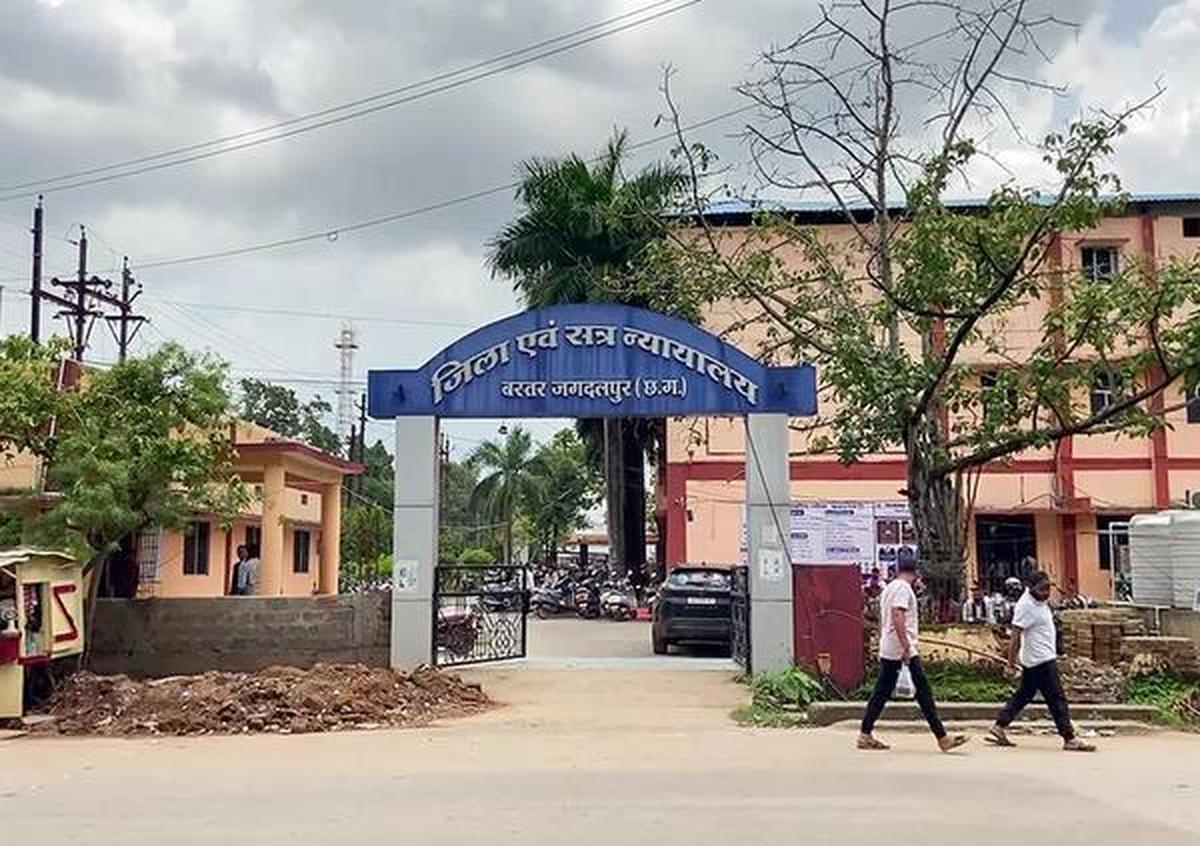
PUCL Chhattisgarh expresses deep concern and anguish over the death sentence awarded today by the Special NIA Court, Jagdalpur, to 10 convicts in the 2013 Jhiram Valley attack case. While PUCL has consistently taken a principled position against political violence in all its forms and unequivocally condemns the heinous killings of 29 Congress Party workers and leaders in the 2013 attack, we believe the death penalty is opposed to the Constitutional principles of Rule of Law and is not the answer to this or any crime. The imposition of capital punishment in this case also raises grave concerns of unequal access to justice, individual culpability, and the disproportionate impact of the harshest punishments upon the poorest and most marginalised sections of society.
Capital Punishment is barbaric and ineffective in deterring crime:
India remains amongst a minority of countries worldwide that still has death penalty in its law books and practices it – as of 2025, 113 countries across the world have abolished capital punishment. It is a cruel and barbaric form of punishment and does not deter crime. It violates the right to life and dignity, and decades of research show no credible evidence that it prevents crime more effectively than life imprisonment.
The burden of capital punishment also falls disproportionately upon the economically and socially marginalized. Project 39A’s landmark Death Penalty India Report found that 74.1% of the prisoners sentenced to death covered by its study were economically vulnerable. The relationship between poverty, and exposure to the harshest punishments cannot be ignored in any serious discussion of capital punishment in India.
The harshest punishment falls on those at the margins, while the alleged architects were never brought to trial: For PUCL, today’s judgment represents a grave miscarriage of justice. The ten persons sentenced to death have consistently maintained their innocence, and their families have throughout maintained that they were falsely implicated in the Jhiram Valley case. They are Adivasi villagers from poor and disadvantaged backgrounds who have already spent approximately thirteen years in incarceration. Today’s judgment, which condemns them to death, compounds what we believe is a grave miscarriage of justice.
Significantly, even the prosecution does not allege that these ten persons conceived, planned or directed the Jhiram Valley attack. The prosecution case itself attributes the planning and direction of the attack to senior Maoist leaders, none of whom were ever brought to trial in the present proceedings. The persons who now face execution are therefore not those whom the prosecution itself identifies as the principal architects of the attack.
Even apart from their consistent claim of innocence, the realities of life in conflict-affected Bastar could not have been ignored while deciding whether these ten persons should live or die. It is well documented, from the Salwa Judum years onward, that residents of such areas are routinely caught between armed actors on multiple sides, and that coercion and pressure are real, recurring features of life there, not an after-the-fact defence. This context ought to have weighed heavily against the imposition of the death penalty. Further, thirteen years of incarceration before sentence is an extraordinary deprivation of liberty, with consequences not only for the prisoners but for their families and communities. The human cost of such prolonged incarceration is not theoretical. One of the undertrials in the Jhiram Valley case died during the pendency of the proceedings after spending several years in custody.
A Setback for Peace and Reconciliation in Bastar: These death sentences must also be viewed against the present circumstances in Bastar. The State Government has repeatedly spoken of peace, dialogue, surrender and rehabilitation as part of its approach to ending the decades-long conflict. In that context, the State demanding the death penalty in this case, and the Court subsequently imposing it, sends a profoundly contradictory message.
For decades, the prisons of Bastar have held large numbers of Adivasi men and women arrested in alleged Maoist cases. Families and civil liberties groups have repeatedly raised cases of false implication, prolonged incarceration and eventual acquittal after years spent in prison. These are not peripheral issues to the conflict in Bastar. They are among its most enduring injustices.
This contradiction has become particularly stark at a moment when the State claims that the armed conflict is ending. While surrender and rehabilitation are being offered to persons leaving the Maoist movement, there has been no comparable, comprehensive process to review the cases of Adivasis who have spent years in prison in alleged Maoist cases, including those who maintain that they were never associated with the Maoist movement at all. Instead of urgently addressing this legacy of incarceration and wrongful implication, the continuing emphasis on securing convictions and seeking increasingly severe punishments risks perpetuating the very injustices that any genuine process of peace and reconciliation must confront.
Justice cannot become synonymous with vengeance. A genuine transition towards peace requires the State to confront the legacy of false arrests, prolonged undertrial incarceration and wrongful prosecutions, and to create a credible and transparent process for reviewing the cases of those who continue to languish in prison.
PUCL Chhattisgarh demands:
• Commutation of the death sentence and judicial review with full attention to individual culpability and mitigating circumstances.
• That the state addresses the conditions of conflict, coercion and deprivation that have drawn or compelled into the orbit of armed organizations.
• A recommitment to restorative, dialogue-based approaches to peace in Bastar over punitive measures that fall disproportionately on the poor.
Justice for the victims of Jhiram Valley cannot be secured by creating further injustice for the marginalised people of Bastar
Issued by
Junas Tirki, President, PUCL CG
Kaladas Dehariya, PUCL, CG