We are all Dimagi Naxals!
By PUCL Bulletin Editorial Board
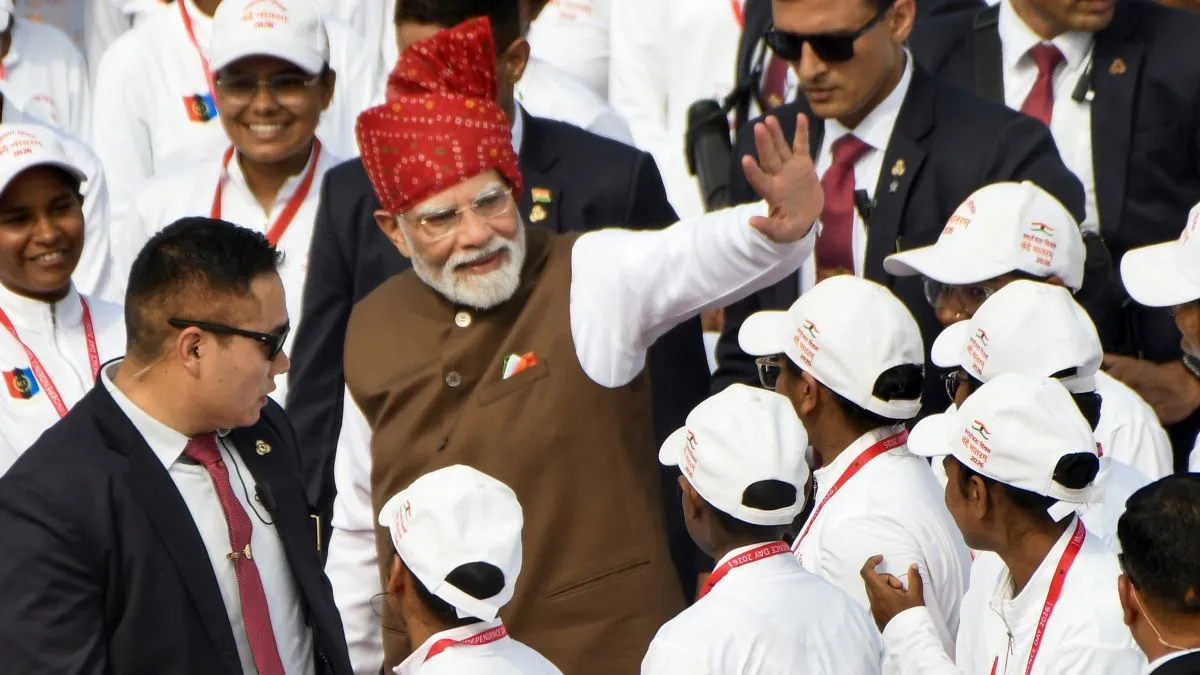
On 15th August, 2026, on the 80th anniversary of India’s independence, Prime Minister Modi, identified a new threat, the so-called ‘Dimagi Naxal’. In the Prime Minister’s words, while the armed Naxals had been defeated, the ideology continues to live. Those who embodied it needed to be identified and isolated, he announced.
While this labelling of an opposition is something we are used to, from the Prime Minister, considering his previous coinages of ‘Tukde Tukde Gang’, ‘Khan Market Gang’, ‘Andolan Jeevi’ and ‘Urban Naxal’, there was something new about this coinage. By using the word ‘Dimag’, the Prime Minister seemed to imply that the very act of thinking is an offence. The Prime Minister shockingly disregards the constitutional imperative under which the right to think enjoys unconditional protection.
Article 19(1) of the founding document of international human rights law, the International Covenant on Civil and Political Rights (ICCPR) states that, ‘Everyone shall have the right to hold opinions without interference.’ The only basis for restricting opinions under Article 19(3) is when opinions are expressed through ‘print’, ‘art’, or ‘any other media’. The basis for restricting opinion are grounds such as ‘national security or of public order (ordre public), or of public health or morals.’
There is no limitation on the right to hold opinions. The right to hold opinions without interference is crucial as the human personality develops through this right. When one uses the word ‘conscience’, it is fundamentally about the right to hold beliefs which may be at odds with what the family, society or nation thinks. It is about allowing for the expression of individual opinion, regardless of what the collective may think. The Preamble to the Indian Constitution, by setting liberty as one of the constitutional ideals, sanctifies the idea that people can think differently and to protect the right to be different is at the very heart of the Indian Constitution.
The Prime Minister through the coinage of ‘Dimagi Naxal’, expresses his reservations about this constitutional guarantee according to which each individual should be allowed to develop in accordance to his or her way of thinking. For the Prime Minister, when such free ‘thought’ aligns with the ideology of Naxalism, a crime is in the offing. However, it may not be too far from the truth, to say that for the Modi regime, you may fall under this category simply for disagreeing with their policies, raising questions or criticising them.
The Prime Minister by creating this new national enemy called the ‘Dimagi Naxal’, who has to be ‘identified’ and ‘isolated’ is declaring himself in alignment with the criminalisation of thought crime in Orwell’s dystopian novel, 1984. As per Orwell, ‘the essential crime that contained all others in itself’ was the ‘Thoughtcrime’. In Orwell’s totalitarian state, citizens were terrorized into submission by the ‘thought police’.
The right wing ecosystem latched on to this idea of a ‘thought crime’ and sought to ‘identify’ and ‘isolate’ all those who disagreed with the policies of the Union Government as ‘Dimagi Naxals’ on social media. When a pillar of the establishment such as former Home Minister, P. Chidambaram (who was himself guilty of human rights violations committed in the name of eradicating Naxalism) tweeted that ‘I am proud to be a Dimagi Naxal’, something had changed.
Modi’s previous attempts at ‘identifying’ and ‘isolating’ those who opposed the policies of the BJP government through disparaging labels such as ‘Urban Naxal’ and ‘Tukde Tukde Gang’ did not see the political class resist by embracing those labels. In the past it was mostly left to courageous civil society voices, be it Girish Karnad who wore a placard saying, ‘I am an Urban Naxal’ or Arundhati Roy who called herself ‘a proud Andolanjeevi’ to challenge the government’s narrative of labelling all opposition to its policies as ‘anti-national’.
The new vocabulary of protest while using satire, also drew from the history of India’s independence movement. This was best embodied in the formation of the online Dimagi Naxal Party which gathered a strong online following in just a few hours. The Dimagi Naxal Party declared that its manifesto is to ‘question everything’, ‘think critically’, ‘seek facts’ and ‘follow the Constitution ‘claiming the tradition’ of Bhagat Singh, who they noted ‘inspired rational thinking, scientific temper and fearless questioning’. Bhagat Singh in their estimation ‘read more books in jail than most cabinets read in a term’ and was therefore the quintessential ‘Dimagi Naxal.’
The pushback seems to have made the Prime Minister realise that Indians used to the constitutional protection of the freedom of speech and expression will not easily submit to the policing of thought itself. The icons of Indian independence, be it Bhagat Singh or Ambedkar, were fierce advocates for the freedom of thought and this historical current could not be delegitimised so easily.
Pushed to a damage control mode, in a rare comedown, the Union Minister for Parliamentary Affairs, Kiren Rijiju was forced to clarify on X that,“PM @narendramodi ji didn’t say opposition leaders as Dimagi Naxals. Only following are Dimagi Naxals: 1. Who support Maoists and reject Indian Constitution. 2. Who stand with separatists & support Article 370. 3. Who want to cut chicken neck to separate North-East from India.”
However, this clarification did little to address the crucial question as to whether the BJP was willing to abide by the values of the Indian Constitution. If according to Rijiju, the Prime Minister meant that Dimagi Naxals were those who supported Maoists and rejected the Indian Constitution, the best response comes from the archive of human rights lawyering. When eminent human rights lawyer and former president of the PUCL, K.G. Kannabiran was asked in court as to ‘why should Naxalites who do not believe in the Constitution take shelter under it?’, he replied, “When such issues come before the court, it is your values and not their values that are on trial. It is the values enshrined in the Constitution and the values of the state that are under test.” Simply put, the expression of a viewpoint which rejects the Constitution is protected speech under the Constitution.
The second category created by Rijiju is the support for Article 370; this has been voiced by politicians, media and civil society. It cannot be a criminal offence to voice a political opinion at odds with the way the Modi government has responded to the Kashmir issue.
Regarding the third category, it must be noted that there is a test laid down by the Supreme Court as to when speech can be restricted under the sedition law. In Balwant Singh v. State of Punjab in 1995, the Supreme Court adjudicated the question as to whether shouting slogans including, “Khalistan Zindabad” in a crowd the day Indira Gandhi was assassinated amounted to sedition. The Supreme Court noted, “We find it difficult to hold that upon the raising of such casual slogans, a couple of times without any other act whatsoever the charge of sedition can be founded.” In simple terms, even the advocacy of the viewpoint that the “chicken neck should be cut to separate North-East from India” is not an offence. It is only when such advocacy becomes incitement to the act that the statement can become a criminal offence. In Shreya Singhal v. Union of India, the Court held that discussion and advocacy of any cause, however unpopular, lies at the heart of Article 19(1)(a), and that only incitement may be restricted.
What cannot be forgotten is the context in which the Prime Minister made his remarks. Just a month ago, a wave of student protests initiated by the Cockroach Janata Party had pushed the government on the backfoot and forced the resignation of the Minister for Education, Dharmendra Pradhan. Clearly the label of ‘Dimagi Naxal’ was nothing other than a preemptive move to target the burgeoning student movement now spanning both Gen Z and Gen Alpha.
In the time going forward it is likely that we will see even more critical speech. We will also see new forms of association both online and offline to ventilate the grievances of all those dissatisfied with the current government. We are also likely to see more protests by students, workers and all those dissatisfied with the status quo.
The constitutional protections of speech, association and assembly are likely to be tested as never before. It is up to ‘we the people’ to ensure that our freedoms are not taken away.
We are all Dimagi Naxals!