Death of Bharat Bhushan Tiwari in an Alleged Police Encounter on 17 June 2026, Village Bilauti, Police Station Shahpur, District Bhojpur, Bihar
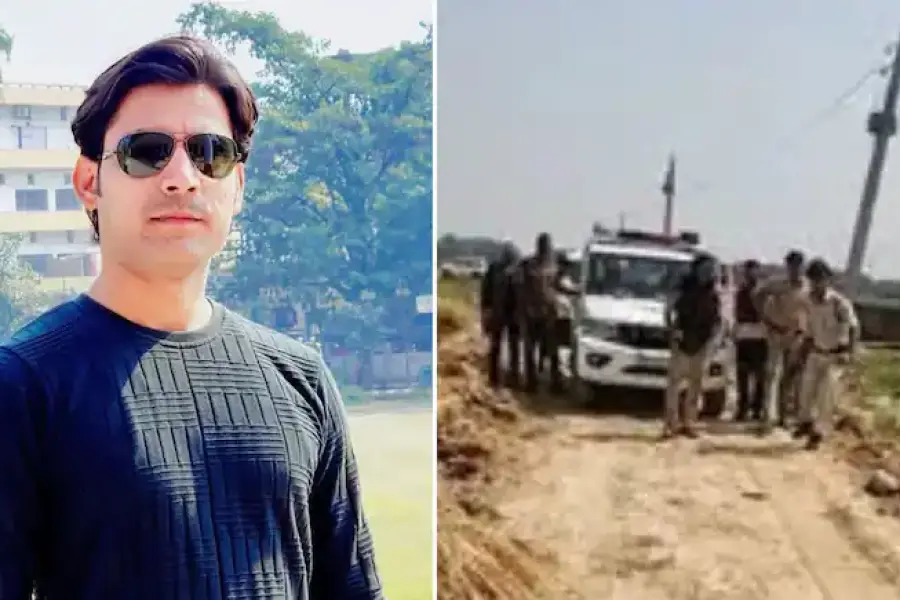
Fact-Finding Team: Kishori Das (former PUCL Bihar State General Secretary/Vice-President and current State Executive Committee Member, team leader), Umesh Kumar Singh (Life Member, PUCL Bihar, Sitamarhi) and Jalandhar Yaduvanshi (Member, PUCL Bihar).
- Background and Methodology
Following extensive media and social-media coverage of the death of Bharat Bhushan Tiwari, son of Kashinath Tiwari of village Bilauti (PS Shahpur, district Bhojpur), in a police encounter on 17 June 2026, PUCL Bihar constituted this fact-finding team, which visited Bilauti on 25 and 26 June 2026.
The team questioned the victim’s family, villagers, eyewitnesses and officials, and inspected the site of the incident. It examined all FIRs registered in connection with the case, the settlement records (basgeet parcha) of families displaced from Jobinia village by erosion caused by the Ganga floods and resettled about 1.5 km south of Bilauti at the Badhar (floodplain), and records relating to funds disbursed under the Chief Minister’s Housing Scheme. The team met the Station House Officer (SHO), Shahpur, the Circle Officer and the Block Development Officer, and reviewed statements of political leaders and experts, along with videos of the incident that circulated widely on social media.
- Family’s Account
Bharat Bhushan Tiwari’s father, Kashinath Tiwari (70, retired police official) stated that on 16 June 2026, 20–25 police personnel came to his house without explanation and asked him to report to Shahpur police station the next morning. When he and other family members went there on the morning of 17 June, they were taken into custody. His account was corroborated by villager S.K. Tiwari and others present. A younger relative interrupted the interview, citing Kashinath Tiwari’s ill health and asking that further questions be directed to the family’s lawyer.
Villagers described Bharat Bhushan Tiwari as the middle of three sons, an unemployed graduate who, after failing to secure government employment, began raising his voice against administrative corruption. According to his brother Chandan Tiwari, Bharat once confronted SDM Sanjeet Kumar over an alleged Rs 1,400-crore scam in development funds for Bilauti and Shahpur block, after which the SDM allegedly threatened to kill him and destroy his family. He had also clashed with a Shahpur police officer over a village land dispute, and repeatedly disputed with the Circle Officer and Block Development Officer over the unresolved housing and waterlogging problems of the Jobinia-displaced settlers. Villagers said this mounting friction — worsened, they said, after he was humiliated by the Sub-Divisional Officer (SDO), Jagdishpur — left him under considerable mental strain, though the team found no medical record of any diagnosed illness. He reportedly sold a gold locket shortly before his death to buy an unlicensed pistol, without his family’s knowledge, and had told people that he had recorded video evidence of corruption on his mobile phone, instructing that only his family should handle the phone after his death.
- The Site and Eyewitness Testimony
The site of the alleged encounter lies on a kachcha (unpaved) road about 1.5 km from Bilauti, beside the huts of the Jobinia-displaced settlers. Local residents have fenced it with bamboo, intending to build a memorial there. Foundations for pucca houses under the Chief Minister’s Housing Scheme are visible nearby.
The team separately questioned several eyewitnesses among the displaced residents — including Rajesh Bind, Narad Chaudhary, Dayashankar Chaudhary, Munna Prasad Chandravanshi, Harsh Chaudhary, Anita Devi, Sonvarsha Devi, Vinod Gond, Surendra Chaudhary and Nandki Devi — whose accounts were materially consistent. According to them, Bharat arrived around 8:00 a.m. on 17 June, as he did most days, to check on housing construction. A small police party of 8–10 personnel arrived around 9:00 a.m.; by 11:00 a.m. more than fifty police had gathered and surrounded him from all sides. Villagers who tried to intervene were driven back at gunpoint. Witnesses said they heard police fire three shots into his legs, causing him to fall; a policeman then approached and fired two more shots at close range near his waist, before he was dragged away and placed in a police vehicle that was driven away from the village. When his mother and sister-in-law tried to reach him, women police personnel abused and drove them back. Despite his injuries, Bharat remained conscious, waving and smiling from the vehicle and telling onlookers he would meet them again.
None of those interviewed described Bharat as having a criminal disposition; instead they credited him with actively helping the settlement obtain electricity connections, land-filling and redress of grievances, often arguing — and occasionally scuffling — with officials on their behalf, but continuing fearlessly despite that friction.
- The Displaced Families of Jobinia
Around 70 families, mostly of the Mallah and Bind communities (traditionally fisherfolk), were displaced when the 2024–25 Ganga floods eroded their homes in Jobinia, about 18 km away, and were resettled at Bilauti under the Abhiyan Baseraa scheme, each receiving 3 decimals of land. Official records furnished by the Circle Officer, Shahpur (Mauza Bilauti, Thana No. 119, Sheet No. 01, Khata Nos. 657 and 157, Khesra Nos. 1162 and 1858, total area 5 acres 19 decimals) show the land was sanctioned under the signatures of the SDO Jagdishpur, the Additional Collector (Land Reforms), Jagdishpur, and the Circle Officer, Shahpur, with land also earmarked for a community building and Anganwadi centre. Socially, the settled families comprise 34 Mallah, 27 Bind, 4 Kadkar (Chandravanshi), 2 Gond, 1 Teli and two other families. Over 200 more displaced families — including 50 Yadav, 10 Brahmin, 100 Raidas (from Ballia, Uttar Pradesh) and 5 Gond households — have received no land and continue to live precariously on the river embankment.
Circle Officer Anand Prakash told the team the site had been chosen before his tenure; each family had received Rs 1,20,000 under the Chief Minister’s Housing Scheme for pucca construction, and roads, hand-pumps and electricity had since been provided, with 28 more families allotted land during his own tenure and a township scheme proposed. The displaced residents, however, maintained that the site remains waterlogged for most of the year and offers no viable livelihood, since it deprives them of access to fishing. The team was unable to meet the SDM, DSP or SP, Bhojpur, who were attending on the judge of a newly constituted Judicial Commission (see Section 7).
- The FIRs
(i) Shahpur PS Case No. 73/25, dated 24-03-2025
Filed by Sub-Inspector Ramashankar Baitha (a Scheduled Caste officer) over a scuffle that occurred while investigating a land dispute between Leelawati Devi’s family and Kashinath Tiwari’s family; Bharat Bhushan Tiwari allegedly assaulted and abused the police party. Sections of the Bharatiya Nyaya Sanhita (BNS) and the SC/ST (Prevention of Atrocities) Act were applied; a chargesheet was filed on 23-06-2025. This remains the only prior criminal case on record against Bharat Bhushan Tiwari.
(ii) Shahpur PS Case No. 169/26, dated 17-06-2026
Filed by SHO Rajesh Malakar. It states that a police party reached Bharat’s house at 5:10 a.m. to arrest him and recover an illegal pistol; he allegedly opened fire, climbed onto his roof, and continued firing despite warnings. His father and brother, Chandan Kumar, were also named as accused for allegedly concealing knowledge of the weapon.
(iii) Shahpur PS Case No. 170/26, dated 17-06-2026
This is the police’s account of the encounter itself, registered by SHO Malakar at 12:20 p.m. at the site. It states that on being told Bharat had left home brandishing his pistol toward the Badhar, police pursued him; he fired at them (a bullet reportedly struck a police vehicle’s bonnet), repeatedly feigned surrender before picking up the pistol again, and was finally fired upon by STF constable Akshay Kumar (J.C. 1149), who fired four rounds below the waist in self-defence from his service pistol (AR General No. 18358619), causing Bharat to fall injured. He was then taken into custody and sent for treatment. The seizure list records recovery of two empty 7.65-bore cartridge cases, one loaded 7.65-bore pistol with two live rounds, one Samsung smartphone and one pair of spectacles, witnessed by police personnel Ramashankar Yadav and Ram Palat Chaubey.
(iv) Post-Mortem
According to available records, Bharat Bhushan Tiwari suffered five bullet wounds — three to the legs, one to the thigh and one to the scrotum.
(v) Shahpur PS Case No. 171/2026, dated 18-06-2026
Registered after family members and villagers blocked NH-922 near Bilauti for about five hours while placing the body on the road in protest. Thirteen named persons — including Saroj Tripathi, Rakesh Yadav, Anjani Tiwari, Baliram Yadav and Mukhiya Randadih — and 50–60 unidentified persons were accused of obstruction and assault on police.
(vi) Shahpur PS FIR No. 178/26, registered 22-06-2026 (application dated 18-06-2026)
Filed on the complaint of Asha Devi, Bharat’s mother. She stated that police, led by the DSP, Jagdishpur, brought Bharat to the displaced settlement ostensibly to hear the residents’ grievances; that while livestreaming on Facebook, he threw down his weapon and surrendered; and that police then pushed him into a pit and, on the DSP’s orders, fired five rounds into him before taking him away. She stated that her husband was detained at the police station all day, and the family was informed of Bharat’s death only that evening. She sought registration of a case against the DSP, the SHO and other police personnel involved.
- Political and Public Reaction
Reactions split broadly into two camps. Several NDA leaders — including former Union Minister Ashwini Choubey and Union Minister Giriraj Singh — termed the killing a murder (Choubey calling it “brahma-hatya”), as did former Minister R.K. Singh and former DGPs Abhayanand and Gupteshwar Pandey, who also raised procedural questions. Union Minister Jitan Ram Manjhi and former MP Nagmani defended the police action. Buxar MP Sudhakar Singh (RJD) held STF DG Kundan Krishnan personally responsible, citing an earlier, similar case from his constituency. Notably, hours before the killing, Chief Minister Samrat Chaudhary had publicly stated that police had been given a free hand to act against anyone brandishing a weapon at them — a remark widely linked to the subsequent shooting. PUCL’s own review found that 13 police encounters have occurred since Samrat Chaudhary became Chief Minister on 15 April 2026.
- Judicial Commission
On 20 June 2026 the Chief Minister ordered a judicial inquiry by a retired Patna High Court judge. Justice Vinod Kumar Sinha visited the victim’s family on 25 June 2026, the same day the PUCL team was in Bilauti. The President of India and the State Human Rights Commission have also taken cognisance of the matter and summoned the Director General of Police and the Chief Secretary.
- Findings of the Fact-Finding Team
(1) Illegal possession does not justify extrajudicial killing: PUCL does not condone Bharat Bhushan Tiwari’s possession of an unlicensed pistol or the viral videos of him brandishing it. However, killing him with police gunfire after he had laid down his weapon and surrendered was illegal, unjust, and amounted — in the team’s assessment — to a planned, brutal killing rather than a genuine encounter.
(2) No history of habitual crime: The only prior case against him, PS Case No. 73/25, arose from a scuffle during a land-dispute inquiry; the SC/ST Act section applied appears inapplicable to the facts and was invoked chiefly because the investigating officer belonged to a Scheduled Caste. No evidence of any serious or organised criminal history was found.
(3) Root cause lies in the Jobinia rehabilitation failure: The Revenue and Land Reforms Department settled 70 landless, mostly extremely-backward-class families on a flood-prone Badhar in violation of its own norms (Revenue Department Resolution No. 172(8) of 2011 and Memo No. 267 of 2014, which require resettlement land to be habitable and not too distant from settled areas). Over 200 further families, including 100 Scheduled Caste households from Uttar Pradesh, remain landless on the embankment. Bharat Bhushan Tiwari’s persistent advocacy on these issues, and alleged evidence of irregularities in development funds said to be on his phone, appear to have made him an irritant to local officials.
(4) Contradictions between FIR Nos. 169 and 170: Both were filed the same day by the same informant (SHO Malakar) but describe two separate episodes hours apart. It remains unexplained why armed police posted specifically to arrest Bharat at his house allowed him to leave, weapon in hand, toward the Badhar — suggesting either negligence, or that this part of the narrative is unreliable.
(5) Conflicting accounts of the shooting itself: Asha Devi’s FIR (No. 178/26) describes a stage-managed surrender followed by killing on the DSP’s orders; the police FIR (No. 170/26) describes prolonged resistance ending in self-defence firing. Eyewitness accounts broadly support the surrender narrative. The team also finds the police claim of “10–12 rounds” fired by Bharat difficult to reconcile with the seizure list, which — prepared with policemen as witnesses rather than independent persons — records only two empty cartridge cases, and with the fact that not a single police officer was hit.
(6) Questionable deployment of the STF: The Special Task Force exists to handle organised crime, terrorism and similar serious threats, not a lone, previously unarmed social activist. The team could not establish on whose orders the STF was deployed, and notes STF DG Kundan Krishnan’s earlier record, including the 2005 killing of two women in Sitamarhi (also investigated by PUCL) while he was SP there, and a controversial 2025 public remark blaming farmers for a rise in murders, for which he later apologised.
(7) Chilling effect on protest and accountability: Following the killing, PS Case No. 171 was registered against hundreds of protesting villagers, and family members report being pressured by police to withdraw their case — a pattern the team links to provisions of the Bihar Police Act, 2007, which it considers to have curtailed, rather than protected, citizens’ right to peaceful protest.
(8) Possible negligence in medical treatment: Although Bharat remained conscious after being shot, he was reportedly moved in an ordinary ambulance rather than an ICU-equipped one, and taken to Patna rather than treated locally without delay. Eyewitnesses heard only three shots, to the legs, yet the post-mortem records five wounds, suggesting two further shots — one possibly fired later, near his waist and groin — may have caused or hastened his death.
(9) Unsubstantiated claims of mental illness: Police and associated sources suggested Bharat suffered from mental illness, but no hospital record or treating doctor has been produced to support this, raising questions about the origin and purpose of this claim.
(10) Delay in registering the mother’s complaint: Asha Devi’s application, acknowledged by the DSP and the Shahpur police station’s Daroga on 18 June, was registered as an FIR only four days later, on 22 June — a delay inconsistent with the Supreme Court’s ruling in Lalita Kumari v. State of Uttar Pradesh, which requires immediate registration where a cognisable offence is disclosed. The accused named in that FIR have still not been arrested.
(11) Overall assessment: Weighing the evidence as a whole, the team’s considered view is that the STF was deployed and the killing carried out as part of a premeditated strategy following the Chief Minister’s public statement — not as a genuine encounter, which would have required Bharat to be shot while actually firing at police, not after his surrender. The subsequent posting of the case’s principal accused, DSP Rajesh Sharma, to the Excise (Prohibition) Department, even while the case remains under investigation, reinforces this concern.
- Recommendations
- Arrest, without delay, the accused named in the FIR registered on Asha Devi’s complaint, in accordance with the Supreme Court’s directions in PUCL v. State of Maharashtra (Criminal Appeal No. 1255/1999, 23 September 2014).
- Withdraw the posting/transfer given to DSP Rajesh Sharma — present at the scene per FIR No. 170/26 and named as accused in Case No. 178/26 — as the same judgment bars preferential postings for officers involved in encounters unless proven innocent.
- Transfer the investigation to an independent agency, since the local police units and officers concerned are themselves implicated.
- Address the root cause by raising and filling the Badhar land with soil, and resettling the remaining landless Jobinia families on land purchased near their original village; remove the disparity between urban and rural construction-cost norms under the Chief Minister’s Housing Scheme.
- Constitute Police Complaints Authorities at the district and state levels, as directed by the Supreme Court on 22 September 2006, with adequate publicity so citizens can access them.
- Refer all police-encounter deaths occurring during Samrat Chaudhary’s tenure as Home Minister and Chief Minister to a retired High Court judge holding no post-retirement government appointment.
- Ensure strict compliance with the Supreme Court’s directions in D.K. Basu v. State of West Bengal on humane, constitutionally consistent policing, and an end to third-degree methods, so as to rebuild public trust in the police.
- Conclusion
The evidence gathered by the team — eyewitness accounts, the contradictions within and between the FIRs, the post-mortem findings, and the surrounding circumstances — raises serious and, in the team’s assessment, largely unanswered questions about whether Bharat Bhushan Tiwari’s death was a lawful use of force or a planned extrajudicial killing following his surrender. Accountability for this incident must be established through a fair, independent investigation and due judicial process — not through political statements or competing narratives alone. PUCL Bihar urges the State Government to act on the recommendations above, both to secure justice in this case and to prevent its recurrence.