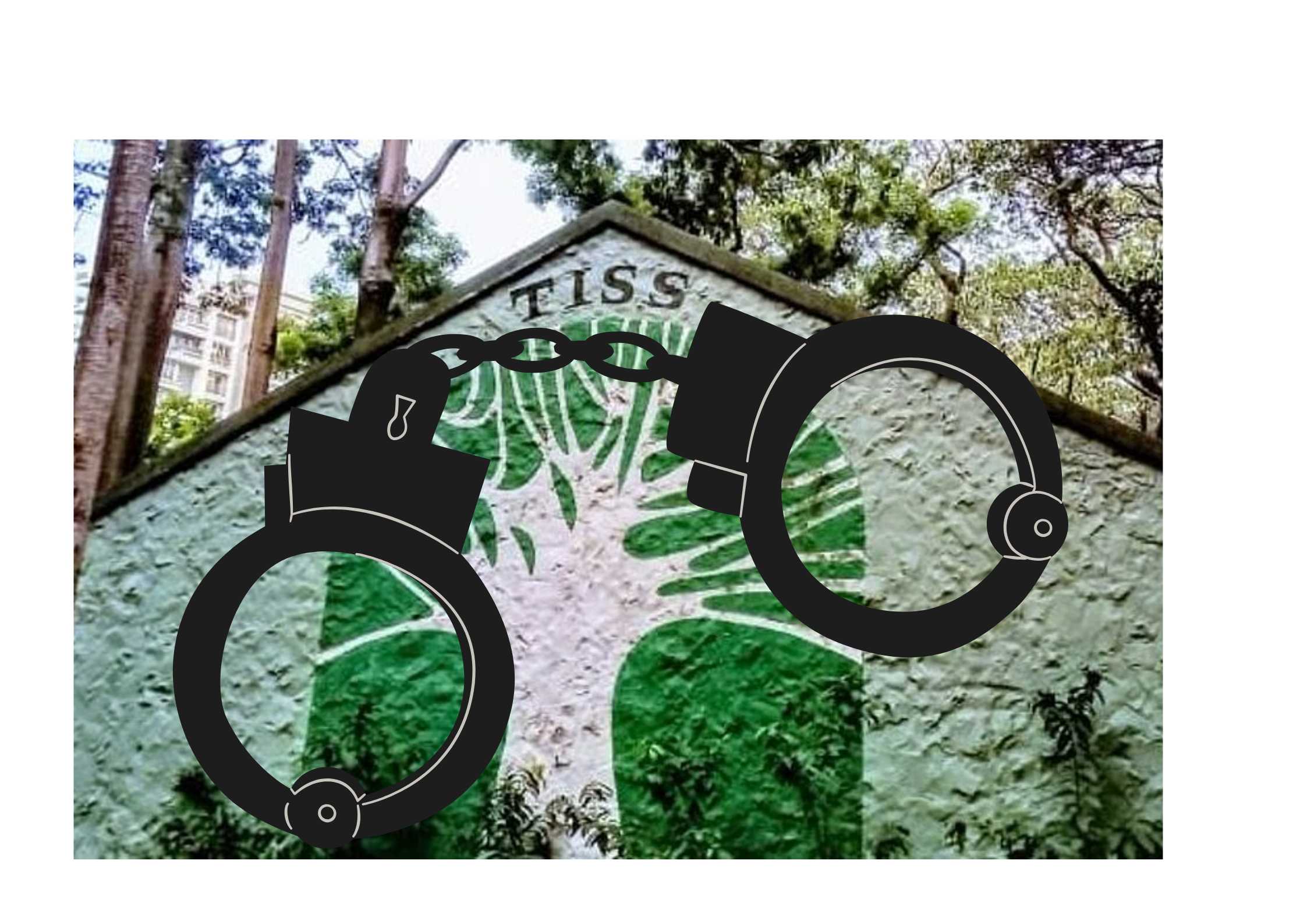
PUCL Maharashtra condemns the Wrongful Prosecution of TISS Students and Arrest of Abhirup Paul in Mumbai in connection with a Student Gathering on Campus
Tags: Freedom of Speech, TISS, Education, Democracy
People’s Union for Civil Liberties (PUCL), Maharashtra is deeply concerned and distressed at the recent developments related to the prosecution of nine Students of the Tata Institute of Social Studies (TISS), the denial of anticipatory bail to two students and arrest of Abhirup Paul, in connection with a student gathering held at the TISS Mumbai campus in October 2025 to commemorate the death anniversary of Prof G N Saibaba.
We strongly condemn the political targeting and victimisation of innocent young students by the TISS Administration and the Mumbai Police. We are equally concerned about the manner in which the matter has been handled by the Sessions Court and the total silence of the higher Judiciary.
Denial of Bail on Unlawful and Arbitrary Grounds
In denying bail to two out of the nine students implicated in the case, being Abhirup Paul and ex-TISS student Kamakhya Das,the Sessions Court created an artificial distinction by placing them on a different footing from the other students who were granted anticipatory bail by the Sessions Court. The justification offered by the Court was that, while the said two accused students had participated in the commemoration event of Prof. G. N. Saibaba along with the others, the fact that “Maoist literature” was found in their possession suggested that they were attempting to influence other students towards their ideology. While the Court acknowledged that there are multiple judgments holding that the mere possession of Maoist literature, by itself, does not constitute a criminal offence; it failed to apply the same principle in the instant case and wrongly held that that possession of such literature demonstrated the ideological, and therefore criminal mindset of the students.
In addition to being contrary to law, the conclusion drawn by the Sessions Court is entirely erroneous and completely disregards principles of critical thinking, inquiry, research and education itself, which promotes curiosity and a wide understanding and review of different perspectives and theories, to arrive at a finding or opinion. Such an imputation drawn by the Court, solely on certain literature recovered from the electronic devices of the accused students, is untenable both in law and in reasonand against the Constitutional rights of the students.
While the FIR itself was filed on 13th October 2025, the anticipatory bail order was pronounced by the Sessions Court after a delay of ten months. During the pendency of the anticipatory bail hearings, all the students had cooperated with the investigating agency and had been interrogated at length. Despite the well-established legal principle that ‘bail is the rule and jail is the exception’, the Sessions Court, while arbitrarily denying anticipatory bail to the two students, failed to justify the requirement for their custody, particularly when the FIR itself had been lodged in October 2025.
What is however even more appalling is that shortly after the denial of anticipatory bail, the police arrested Abhirup Paul from his residence on 7th August 2026, denying him the opportunity to challenge the order. While seeking his remand, the police made allegation based on visits purportedly made by him in rural Maharashtra for field work, which is a legitimate and essential part of academic learning and research. He is currently in judicial custody. Meanwhile, Kamakhya Das, who filed an appeal in the Bombay High Court from the Sessions Court order, has been granted interim protection from arrest on 14th August 2026 by the High Court.
Freedom of Expression & Dissent
Another facet stressed upon by the Sessions Court and the prosecution was the alleged raising of slogans by the students to release Umar Khalid and Sharjeel Imam. While the students denied raising any slogans at the commemoration event, there is nothing unlawful or illegal about raising slogans in support of student defenders who have been in jail for six years without trial or bail. Their prolonged incarceration without trial raises grave concerns regarding due process and fundamental rights, and has been raised time and again by citizens groups, civil society organisations, political representatives, lawyers and even former judges.
The Indian Constitution guarantees citizens the right to freedom of speech and peaceful assembly under article 19(1)(a) and 19(1)(b). These freedoms necessarily include the right to express dissent, question government policies and articulate opinions that may be unpopular or critical of those in power. This is precisely the democratic right that students must be free to exercise on university campuses.
Hence, we find the action by the Mumbai Police and TISS administration shocking and a violation of fundamental rights of peaceful, law abiding citizens. It is also a frontal attack on academic freedoms, which promotes democratic spaces within campuses, recognizes student engagement with different ideas and opinions and exercise of their fundamental freedoms. More broadly however, this episode reflects an increasing and disturbing pattern in the last decade to crush dissent in campuses and colleges using illegal threats of prosecution, intimidation and even force against students. This wrongful prosecution of the TISS students seems to be yet another attempt to create target students to evoke fear in the larger student population,thereby creating a ‘chilling effect’ across campuses.
Autonomy and Institutional Character of Educational Institutions
It is appalling that the TISS administration set off the criminal machinery against its own students, in connection with a peaceful gathering organized by some students on campus, even if it was in disagreement with the same. Existing internal / institutional processes were bypassed in favour of criminalizing students without even offering them an opportunity of hearing, thereby rendering them vulnerable to serious consequences for a completely harmless and legitimate act of organizing a small gathering on campus.
Moreover, the nature of allegations and fishing inquiry being conducted in the criminal investigation, with questions being raised on field work, literature and reading material, sets a dangerous precedent in criminalizing inquiry, curiosity, critical thinking, research and thought itself, which are must in social science education. Allowing such vindictive criminal action founded on clearly fictitious premise to continue, raises questionon the academic and institutional character of the institution.
The conduct of the TISS administration in the entire matter is disappointing and follows a trend of vindictive actions taken against scholars on campus in the recent past, and reflects the fall of this once celebrated institution. This will only erode the confidence of prospective and existing students and their parents in the institution, when internal processes do not appear to be fair and credible safeguards, affecting the credibility of the institution.
We maintain that Universities must remain spaces where students can debate, dissent and engage with contested ideas without fear of arbitrary disciplinary action or criminal prosecution.
PUCL Maharashtra accordingly demands that:
- Abhirup Paul be immediately released from jail and all other students be protected from arrest in this false case launched against them
- The TISS administration immediately withdraw all complaints against the students
- The Mumbai Police close the FIR and end the wrongful prosecution of the TISS students for the exercise of their constitutionally protected rights
We appeal to the academic, teacher and student community to speak up against this unjustified and unprincipled actions of the TISS administration, which threatens academic freedoms and scholastic pursuit in the country.
We also appeal to all Universities and Colleges to protect institutional autonomy, academic freedoms and to free themselves of ideological and administrative capture; to ensure that campuses provide space for free thought, dissent and dialogue, and safeguard scholars on their campuses.
We believe that the right to dissent is fundamental to democracy and that educational institutions must remain places where that right is protected, not punished.
Shiraz Bulsara Prabhu, President
Sandhya Gokhale, General Secretary
People’s Union for Civil Liberties, Maharashtra