Supreme Court Upholds Rule of Consent and Human Rights: Detention and Rehabilitation Cannot Be Imposed on Sex Workers and Victims of Sex Trafficking Against Their Will
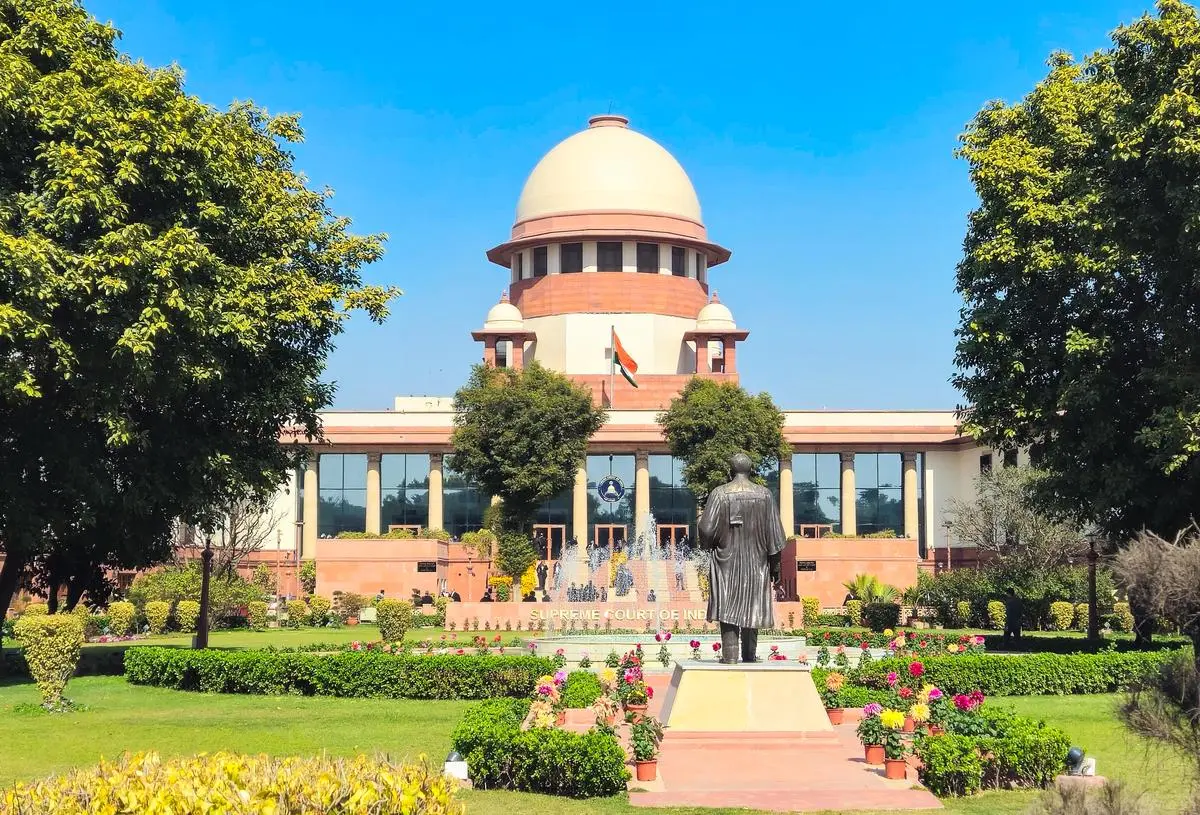
By Anju Rao G.
In Prajwala vs. Union of India (2026 INSC 609), the apex court has issued nationwide guidelines directing the implementation of a Victim Protection Plan in context of CSE, not by merely interpreting available statutory material but by reading them in the light of Articles 21 and 23 of the Constitution. The directions detail the manner in which preventive, protective and rehabilitative measures must be implemented to safeguard the fundamental rights of the victims of trafficking for CSE.
A Division Bench of Justice JB Pardiwala and Justice R Mahadevan adjudicated upon three issues i.e whether victims of trafficking for CSE are entitled to the right to rehabilitation, whether there are gaps in the legislative and institutional frameworks regarding their rescue, protection, rehabilitation, and repatriation, and whether there is a need to create an Organised Crime Investigation Agency(OCIA) for offences of human trafficking.
The judgement is historic in declaring that while the victim is entitled to the right to rehabilitation owed by the State under Article 23, the victim’s own wishes and desires shall determine her consent to rehabilitation under Article 21, including the mode of carrying it out to suit her unique situation. The Court held that the rehabilitative process cannot be imposed upon a victim against her will, thereby upholding her agency in exercising her right to live with dignity.
Conflation between sex trafficking and voluntary adult sex work
The judgement discusses the problem of conflation between coerced and voluntary sex work that exists in the Indian legislative framework. It recognises that over time, due to associations made between prostitution and trafficking in popular and legal discourse, the acts of third parties done in furtherance of prostitution came to be equated with trafficking itself. Further, the judgement acknowledges that two different understandings of what constitutes trafficking for CSE are operating simultaneously in India.
On the one hand, the Immoral Traffic (Prevention) Act, 1956 criminalises third parties for the prostitution of others, with or without their consent, and presupposes that all prostitution is inherently exploitative. The same statute does not criminalise or prohibit prostitution of any kind. In fact, the judgement begins the analysis of the ITPA by titling the section, ‘Necessary prelude to the ITPA – the conflation between sex trafficking and prostitution’. These observations of the Court directly address the struggles of adult voluntary sex workers who are mechanically misidentified as coerced victims and subjected to human rights violations in the raid, rescue and rehabilitation model of the ITPA. The Court observed that owing to moral judgement and social stigma, adult voluntary sex workers are isolated, their concerns are dismissed and they are unable to access protections due to bias and prejudice of those responsible for it.
On the other hand, the term ‘trafficking in persons’ was left undefined until Section 370 IPC was introduced, now provided for under Section 143 of the Bharatiya Nyaya Sanhita 2023. Under this section, trafficking requires that an act of bringing a person towards prostitution must have been done through a specified non-consensual means, such as force, coercion, inducement, or deception, for it to constitute trafficking, even in case of child victims.
Conduct of police and officials during raids and rescue
The Court noted that raids and rescue operations are regrettably conducted in a degrading and humiliating manner. In its foremost directions, the Court incorporated non-criminalisation, non-stigmatisation and non-discrimination of victims among the fundamental principles of its guidelines. More particularly, at paragraph 362 (c) (ii), the Court directed rules for officials forming part of the rescue team that no person shall be abused, either verbally or physically, that there must be no use of unnecessary physical force or manhandling, and that no misdemeanours or offences shall be committed in the course of rescue, failing which the victim has the right to prosecute them.
Magistrate’s duty for threshold inquiry about voluntary sex work
The Court directed that after ascertaining whether the victim is a minor or adult, the magistrate before whom adult victims are produced must hold a threshold enquiry:
“362 (d)(xii). At the first hearing, the Magistrate shall hear the victim, among other things, on: (i) whether she considers herself to be engaging in prostitution on her own volition and without coercion, fraud or force, whether direct or indirect, and (ii) whether she wishes to be placed in long-term safe custody by virtue of an order under Section 17(4), ITPA.”
The reason for this determination is rooted in the landmark constitutional judgement of Budhadev Karmaskar V. State of West Bengal, 2022 that was the first to directly address human rights violations suffered by voluntary sex workers and upheld their equal right to live with dignity under Article 21. The Supreme Court had held that since voluntary sex work is not illegal and only the running of a brothel is, such sex workers found in raids should not be victimised or taken into custody under the ITPA; that rehabilitation should not be coercive but voluntary on the part of the sex workers.
In the Prajwala judgement, the Court observed that it is still possible for adult voluntary sex workers to end up being produced as victims of trafficking in CSE before the magistrate nonetheless. This is because removal and rescue operations are conducted in difficult and time-sensitive circumstances. It is with reference to omission of this non-interference principle by law enforcement agencies that the Court introduced a magisterial threshold enquiry in express terms, thereby reconfirming Budhadev Karmaskar and the right to personal liberty under Article 21.
Rehabilitation should be non-coercive
The Court held that the right to live with dignity broadly includes three dimensions: i) the right not to be treated as an object, ii) access to the minimum material conditions for a meaningful life, and iii) the right to be recognised. In victims trafficked for CSE, the crime violates their right to live with dignity directly at all three fronts.
The Court indicated that rehabilitation addresses the second and third dimensions. It is, simultaneously, an obligation owed to victims under Article 23. At paragraphs 287 and 288, the Court stated that rehabilitation must encompass goods, shelter, medical care, psychological support, compensation and vocational training i.e all that is necessary to enable the adult victim to sustain herself independently, and reduction of stigma, isolation and margination to facilitate her genuine reintegration into the community.
At the same time, the Court also held at paragraph 348, ahead of its directions in the matter, that forcible imposition of rehabilitation is also wrong in principle. A victim may have her own understanding of what rehabilitation means and how she wishes to pursue it. The Court held that rehabilitation measures would further the inherent dignity of a victim only when they are designed and implemented with her own choices, wishes, and specific circumstances at their center. By upholding the decisional autonomy of the victim, the Court is invoking the first dimension of her right to live with dignity under Article 21.
Is detention in ITPA Protective Homes part of rehabilitation?
While laying out that the right to rehabilitation includes the right to be protected, the Supreme Court acknowledged that the ITPA subscribes strictly to an institutionalised, detention-based protection model. It includes no freedom of movement of the victim’s own volition, separation from those she is close to, end to her privacy under institutional control and impaired ability to earn a livelihood for herself and other dependents. Mandatory and fixed-period long term protective custody slowly begin to mirror penal custodial institutions with prison rules. Read together, the Court’s exposition of the protective homes indicates violations of the victim’s rights under Article 14, 19 and 21 when she is dealt with under the ITPA.
Rights of sex workers can exist without right to sex work.
Until Budhadev Karmaskar, sex workers and their human rights violations were never taken up as subject matter of judicial consideration. They were not deemed worthy of discussion since, in the Court’s own words at paragraph 410, they are often categorised as ‘immoral’ or ‘fallen’ and seen as less deserving of dignity and legal protection.
With the Prajwala judgement, the Supreme Court emphasised the constitutional rights of sex workers once again under Article 21. The Court advised the government to re-examine the conflation between sex trafficking and prostitution in the present legislative framework and recommended that there was sufficient scope for recognition, protection and mechanisms to enforce rights of adult voluntary sex workers even within the existing framework.
The Court, in its judicial conscience, held at paragraph 455 (c) that the rights of sex workers can exist without there being a right to sex work. It expressed hope that such recognition will, to some extent, reduce the marginalisation, isolation, and stigmatisation that sex workers face, and thereby pave the way for their more meaningful reintegration into society.
Anju Rao G. is an advocate practising in the High Court of Telangana.