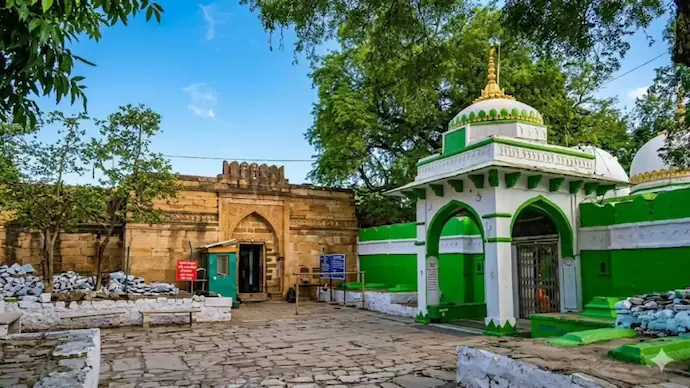
PUCL condemns the judgment of the Madhya Pradesh High Court holding that the Kamal Maula Mosque was built on a Sarasvati temple and hence possession vests exclusively with the Hindutva petitioners
The PUCL faults the Madhya Pradesh High Court for being impervious to the spirit of fraternity and secularism which is the soul of the Constitution.
PUCL demands that the Religious Places of Worship Act, 1991 be strictly followed and interpreted as a legislation enacted to uphold secularism
The May, 2026 judgment of the Division Bench of Madhya Pradesh High Court holding that Kamal Maula Mosque was actually built by demolishing a Saraswati temple and therefore only Hindus had a right to worship there suffers from serious constitutional infirmities. The Madhya Pradesh High Court has unleashed the communal genie sought to be bottled up by the Places of Worship Act, with incalculable implications for communal harmony throughout the country. The judgment gives the green signal to right wing organisations around the country who can now similarly activate the process of law and seek to convert places of worship belonging to Muslims to temples. It is this thoughtless unleashing of a future of strife based on a willful misreading of the Babri Masjid judgment for which this judgment needs to be critiqued. Madhya Pradesh itself will see the next act in this unconstitutional drama when a plea to treat Bijamandal Mosque as Vijay Mandir comes up before the Gwalior Bench.
Historical background
The basis of the petition filed by the Hindu Front for Justice (whose office bearers include those who played an active role in the Ram Janmabhumi agitation as well as active members of the BJP and allied front organisations of the RSS) on the basis that that in 1004 there was a Saraswati temple constructed by Raja Bhoj which was demolished by Muslims. Between 1304 and 1331 CE the Kamal Maula Mosque was constructed. Public interest litigations were filed in the High Court with the petitioners claiming exclusive right to worship (not title to the property) at the Kamal Maula Mosque which they characterized as the Bhojshala. This structure was a protected monument under the Ancient Monuments and Archeological Sites and Remains Act, 1958.The archival information noted by the Court indicates that the structure was dedicated as a mosque at least since 1935.
In 2003 there was a direction by ASI under which Muslims could perform namaz on Fridays while Hindus could perform puja on Tuesdays. This was challenged by both communities. In March, 2024 the High Court had ordered the ASI to conduct “complete scientific investigation, survey and excavation” of the disputed site. Supreme Court upheld this order but barred release of the survey report and any excavation that could alter the religious character of the site.
Stay on pending suits
In December, 2024 the Supreme Court granted an important pan India stay in all pending suits related to ascertaining the religious character of places of worship with a view to changing the same. The stay sought to put the lid on the explosion of litigations around the country seeking to alter the status of Muslim places of worship to Hindu places of worship. The stay was in the context of a challenge to the constitutionality of the Places of Worship (Special Provisions) Act, 1991.
The Places of Worship Act
The Places of Worship Act itself was passed during the Babri Masjid agitation and was the first attempt at putting a lid on these kinds of unconstitutional demands. This Act provided that religious character of every place of worship as it existed on 15th August, 1947 shall continue to be the same and that no suit, appeal or legal proceeding shall seek to convert that character. All pending cases seeking such conversion stood abated.
The Places of Worship Act was a legislation meant to safeguard the secular character of the Indian republic. These constitutional implications of this law were outlined in the Babri Masjid judgment. The judgment while it did not do justice to the Muslims in the case of the Babri Masjid held out a promise that a similar injustice would not occur in the context of any other monument in India.
The promise came from the Court’s understanding of the constitutional significance of the Places of Worship Act. The Supreme Court held that, the Places of Worship Act, affirms the solemn duty to preserve the ‘character of places of public worship’…In preserving the character of places of public worship, Parliament has mandated in no uncertain terms that history and its wrongs shall not be used as instruments to oppress the present and the future.’
Non-derogability and non-retrogression
The Court went on to hold that, ‘The Places of Worship Act imposes a non-derogable obligation towards enforcing our commitment to secularism under the Indian Constitution. The law is hence a legislative instrument designed to protect the secular features of the Indian polity, which is one of the basic features of the Constitution. Non-retrogression is a foundational feature of the fundamental constitutional principles of which secularism is a core component. The Places of Worship Act is thus a legislative intervention which preserves non-retrogression as an essential feature of our secular values.’
The understanding of the Court was that the obligation not to covert the status of a religious place was non derogable. This meant that this obligation was so central to the meaning of the Indian Constitution that it could not be suspended, limited, or violated under any circumstances. This obligation was also based on the principle of non-retrogression, which in simple terms means that a right once recognised cannot be taken away.
Laudable as this aim was, there were two exceptions. Firstly, the Babri Masjid itself and Secondly, ‘ancient and historical monuments’ covered under the Ancient Monuments and Archeological Sites and Remains Act, 1958.
The principle which was laid down by the Supreme Court was that Babri Masjid was an exception which was permitted so as to preserve the rule. The philosophy of the court in Shakespearean terms was that ‘To do a great right do a little wrong’. Thus, even as the Court legitimised a range of illegalities and authorised the conversion of a mosque into a temple, the legislation in effect said thus far and no more. The PUCL is of the opinion that while the Babri Masjid judgment suffers from serious legal and constitutional infirmities, its most important forward looking ratio was the principle of non-retrogression which sought to put the lid on future controversies.
The second exception with regard to ‘ancient an historical monuments’ has become a matter of controversy today. This is because the ASI manages nearly 3700 protected monuments under this Act. Majority of the important mosques across the country are covered in this including the Bhojshala, thereby potentially destroying the rule that the religious character of places of worship cannot be altered.
However, this is a misreading of the very purpose of the legislation. The Ancient Monuments and Archaeological Sites and Remains Act, 1958 was enacted with the purpose of ‘preservation of ancient and historical monuments and archaeological sites and remains of national importance, for the regulation of archaeological excavations and for the protection of sculptures, carvings and other like objects’. The purpose of the legislation has to read in harmony with the Places of Worship Act. The reason the Places of Worship Act carves out an exception to ‘ancient and historical monuments’ is so that the work of conservation and preservation which could include digging at the site and restoration work etc. is not impeded. The purpose of recognizing an exception is not to facilitate a change in religious character of a place of worship thereby subverting the intention and purpose of the Places of Worship Act.
Opening the lid
Despite this clear understanding, one of the authors of the Ayodhya Judgment, Justice D.Y. Chandrachud opening the lid again. He entertained the dispute concerning the religious character of the Gyanvyapi mosque by making an oral observation that an archeological ‘survey did not fall foul of the Act’ as it did not amount to altering the religious character of the place. This of course begged the question as to what the purpose of the survey was, if not to alter the religious character of the place of worship! This opening of the lid lead to similar cases started being filed across the country leading to major communal tensions.
In the mean while the constitutional validity of the Places of Worship Act was challenged in the Supreme Court. In hearing the matter in December 2024 a three judge Bench headed by then Chief Justice Khanna gave an interim stay that “though fresh suits may be filed, no suits would be registered and no proceedings shall be undertaken therein.” Further in respect of pending suits, ‘no court will pass any effective interim orders or final orders, including orders directing surveys, etc.’ This was pending the decision on constitutionality of the 1991 Act, which matter is yet to be decided.
However, the stay granted by the Khanna bench of the Supreme Court was bypassed by Chief Justice Suryakant in the case of Bhojshala. In January, 2026 a Bench headed by Chief Justice Suryakant ordered the survey report to be given to all parties and directed the writ petitions to be finally decided in the Bhojshala matter in a petition filed by the Hindu Front for Justice. The absurd logic of Justice Suryakant’s order which can be inferred is that Justice Khanna’s stay order applies only to suits and not writ petitions or public interest litigations. Thus the same or similar prayers sought for in a ‘suit’ have to be stayed but if they are sought through a writ petition they can be continued.
This is nothing but semantic jugglery bereft of a constitutional logic. While the writ jurisdiction cannot be ousted by a statute, it cannot be exercised in such a manner as to render null a statutory provision which encodes a constitutional principle. The Court should not have entertained a writ whose sole purpose was to render null and void the Places of Worship Act’s prohibition on civil proceedings in respect of the conversion of the religious character of places of worship. The Court should have refused to exercise jurisdiction as by doing so it released the genie of endless communal conflict from the bottle.
Ordinarily writ petitions (where no oral evidence is led and there is no chance of cross examining witnesses) are not maintainable when there are disputed questions of facts. For that a full fledged trial has to be conducted as it had happened in the case of Babri Masjid. This would give an opportunity for contesting parties to lead evidence concerning historical facts, cross examine experts, bring their own experts, etc. What the order of the Supreme Court followed by the judgment of the High Court does is, bypass the stay of the Supreme Court as well as bypass the procedural and legal requirement of a full-fledged trial. It permits the High Courts to declare any place of worship as originally belonging to Hindus on the basis of oral arguments and disputed documents. This opens up the door for High Courts across the country to declare ancient or historical monuments as being exclusively Hindu without having to undergo the rigours of a trial.
The Report of the ASI is not a credible report based on rigorous scientific evidence.
The judgment of the High Court is shot through with procedural, legal and constitutional infirmities. The High Court decided the matter purely on the basis of report of Archeological Survey of India, which in itself is answerable to Department of Cultural Affairs, Union of India. Its reports are neither peer reviewed nor publicly available. In the present case, though carbon dating was directed no such carbon dating was done.
The Report itself was nothing other than a dossier, produced by a non-independent agency. The dossier contained selective documentation which was handed over judges in sealed covers and became the basis for a verdict which deprives the Muslim community of the right to consider a structure which had been a mosque for seven hundred years as a mosque. This immediately translates into exclusive possession to the Hindutva groups and prohibition of access of Muslims to the Kamal Maula Mosque. All on a finding that there was a temple underlying the mosque which rests on debatable scientific evidence marshalled by the Archaeological Survey of India which is no more than a department of the Ministry of Culture.
The courts should be bound by the constitutional principle of non-retrogression
But the more important question which arises is that even assuming that a mosque was built over a Saraswati temple 700 years, should the Courts be depriving contemporary communities of the right to worship based on ancient history? Should not the courts be bound by the constitutional principle of non-retrogression ?
If Muslims have enjoyed the right to consider the Kamal Maula Mosque as a mosque for over seven hundred years, that right cannot be snatched away today. Stripping Muslims of the right to worship at the Kamal Maula Mosque (which they have historically enjoyed) is an act of retrogression which is constitutionally prohibited.
PUCL critiques the judgment of Madhya Pradesh High Court as being wrong on facts and law. The PUCL faults the Madhya Pradesh High Court for being impervious to the spirit of fraternity and secularism which pervades the Constitution. The prayer of the petitioners was ‘regarding claim of exclusive right of worship on the disputed portion of khasra land of Bhojshala and Kamal Maula Mosque and also a declaration that the members of Muslim community have no right to use any portion of the aforesaid property for any religious purposes.’ A constitutional court should have been shocked by the prayer and refused to entertain a mischievous claim to prohibit the Muslim community from using the property for ‘any religious purposes’ as deeply antithetical to the idea of ‘we the people’ who had given ourselves a Constitution with fraternity as an ideal and secularism as a goal.
PUCL hopes that the Supreme Court pays heed to the spirit of the Constitution and this judgment is overruled. PUCL demands that the Religious Places of Worship Act, 1991 be strictly followed and interpreted as a legislation enacted to uphold secularism.
The courts must defend the constitutionality of the Religious Places of Worship Act, 1991 as a vital element of the basic structure of the Constitution. It’s critical that the constitutional courts put a stop to the endless instrumentalization of real or perceived historical grievances and thereby actively protect the constitutional values of fraternity and secularism. Nothing less is expected of the constitutional courts if they are to fulfil their responsibility of being custodians of the Constitution.