PUCL-Tamil Nadu welcomes the verdict holding police officials accountable for custodial torture leading to death of Jayaraj and Benniks
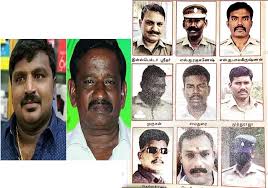
The Tamil Nadu & Puducherry PUCL welcomes the Madurai Additional District & Sessions Court verdict in the father and son duo custodial death case. The Verdict has delivered a great blow to the sense of impunity – being gleefully cherished by the so-called custodians of the law. Besides the verdict has contributed immensely towards the evolution of Anti – Torture Jurisprudence. It has fixed constitutional and criminal accountability of the culprits in Khaki uniform.
Background of the case
The father and son namely Jayaraj and Benniks, the former was running a Timber business and the latter a Mobile Business in the rear and front portion of the premises respectively in Sathankulam in Thoothukudi district in Southern Tamil Nadu. During the lockdown period of Covid – 19 in 2020, the father Jayaraj was taken into police custody for an alleged violation of Covid curfew. The power already inherent coupled with emergency powers make the cantankerous men in uniform commit heinous crimes that match the famous quote “Power Corrupts and absolute power corrupts absolutely”. On hearing the father’s police custody the son Jeyaraj went to the police station to question his father’s custody. Following this the son was also forcefully taken into police custody. Both the father and son were physically and sexually tortured in an discriminate and brazen manner between 7.45 p.m of 19.06.2020 and 3.00 am of 20.06.2020 in the police station and were subsequently remanded to judicial custody in Kovilpatti sub jail which is about 90 kms away from Sathankulam. Benniks succumbed to the brutal injuries on 22.06.2020 and Jayaraj the father on 23.06.2020. The FIR No. 312/2020 was registered against them Under Sec. 188,269, 294 B and 506 (i) and 353 of IPC after they had been subjected to brutal torture.
The Tamil Nadu Government transferred the case to CBCID and then to the CBI which filed the charge sheet. The court found all the accused police officials guilty under
Sec 302 of IPC (Murder)
Sec 342 of IPC (Wrongful confinement)
Sec 211 of IPC(False charge)
Sec 218 of IPC ( Framing incorrect record by police servant)
Sec 109 of IPC (Abetment) Read with 34 of IPC (Common intention)
The verdict has imposed death sentence to all the 9 accused and monetary compensation of Rs.1.40 crores to be paid by the 9 accused. The 10th accused died during the Trial. We PUCL in letter and spirit is opposed to the death penalty. We are of the view that life sentence till last breath could be a substitute for death penalty.
The crucial evidence that led to conviction in this case
The evidence of Revathy (Pw.47) Head constable : Her courageous and conscientious evidence played a crucial role in this case. The following is an example:
She deposed “that Sridhar (A1) The Inspector of Police, said to the other delinquent police personnal “ Beating a person on his prone lying position that too on a table, indeed, is a new method in the torture culture. Shall we go for another round of beating? and further said to the co accused Murugan “ Let them (father and son) sit in the custodial room without dress in stark naked”.
Emergence of internal whistle blowing of this kind from the place of occurrence would definitely prove a deterrent to custodial violence. If honest police officials like Revathy come forward to testify against superior police officers, it bound to restrict custodial torture.
The evidence of Beulah Selvarani (Pw-44), who is the writer in the police station, is noteworthy. She scolded Pw47 Revathy for her signing in the medical memo at the command of A1 Sridhar, the police Inspector.
The evidence of Velmurugan (Pw33) the scavenger in the police station who is physically deaf and dumb deposed about the cleaning of the blood strewn on the floor, wall and table of the police station at the என்று command of A1 Sridhar, the police inspector. The evidence of Pw26 – the Jeep driver of A1 Sridhar also corroborated the evidence of Revathy.
Magisterial Enquiry under CrPC 176 (1) (A) by the Kovilpatti Judicial Magistrate Bharathidasan:
He made an impeccable enquiry covering all aspects of the case that laid a strong foundation for conviction in this case. The suo motu cognizance and supervision of the case by the Madurai Branch of the Madras High Court bench comprising Justice P.N.Prakash and Justice Pugazhenthi played a significant role. Further Inquest report, Postmortem report and forensic evidence proved clinching in this case.
Other Government officials who facilitated the crime:
Dr. Vanila who was a doctor in Sathankulam Government Hospital, gave a doctored certificate as “fit for remand” of Jayaraj and Benniks in tune with the evil design of the delinquent police personnel. It is pertinent to mention here that, Indian Courts often quote to highlight the “total and paramount obligation of doctors to protect life under Article 21 of the Indian Constitution”. This is emphasized in the Supreme Court Judgement “Jacob Mathew Vs State of Punjab ( 2005) “.
Sathankulam Judicial Magistrate Saravanan: Without verification and evaluation of the police report he ordered for mechanical remand of the father and son duo. He made remand order completely disregarding the directions given in the Supreme Court Judgment “Arnesh Kumar Vs State of Bihar (02.07.2014)
The Superintendent of Kovilpatti Sub Jail Mr. Sankar: Even though the injuries on the bodies of Jayaraj and Benniks were registered in the admission register, the father and son were not sent for immediate emergent treatment. It is a criminal negligence on the part of the Superintendent of Kovilpatti Sub Jail. This is an example of systemic failure.
No action has been taken on the “command and responsibility principle” against the DSP of Sathankulam whose office is hardly 100 meters away from the Sathankulam Police Station.
Important observations in the judgment from human rights perspective
Page 596 (345) “There is a difference between an individual committing offences and a government official committing offences. The right to life and liberty with dignity is conferred and guaranteed by Article 21 of the Constitution on every citizen. Disregarding this fundamental right, undressing son before father and undressing father before son and cruely torturing thereby causing death to them shocks the conscience of the justice and the society at large. They were tortured as if they were “worms and insects”.
Page 593 : (340) “All the accused in this case are learned and have been in Government official position. They are legally bound to be the protectors of public. Like the proverb “Fence grazing the crops”, those who entrusted the duty of safe guarding citizen have themselves committed this crime and kept the father and son stand naked and assaulting them physically, sexually in an indiscriminate and brazen manner. Going through the videos and photos of the postmortem makes one’s heart wrench to the core. In no way the agony – the wife of Jeyaraj and the mother of Benniks, could be healed. In the annals of India this is not the first case and it is not going to be the final case. This is not only prevalent in India but all over the world. Barely a month before this cruelty on 25.05.2020 in USA the torture death of George Floyd occurred. After Santhankulam tragedy, custodial death of Ajith Kumar has occurred in Madappuram in Sivagangai District”.
The Evolution of Anti – Torture Jurisprudence
There is catena of Supreme Court Judgments towards the development of Anti – Torture Jurisprudence.
Nilabati Behra v. State of Orissa on 24.03.1993 which held that, state is liable for custodial death and mandated compensation to the affected family.
D.K. Basu v. State of West Bengal on 18.12.1996 which has issued guidelines on the rights of the arrested persons and upheld the right to dignity, equality and life under Article 21. Indeed Article 21, 20 (3) and 22 of the Constitution collectively guarantee fundamental safeguards for the arrestees and detenus. The guidelines have been incorporated in the Cr.PC 1973 by the code of criminal procedure (Amendment Act 2008) (w.e.f 1.11.2010).
Mehboob Basha v. State rep by SP – 2011 7 SCC 45 which warns the policemen that custodial torture will not be tolerated. The order was directed to be circulated to the DGP office down to the level of SH officers across India.
Arnesh Kumar v. State of Bihar, dated 02.07.2014 , which mandates issue of notice (41 A Cr.PC now BNSS 35 (3) before arrest. Police must issue a notice under Section 41 A Cr.PC for offences with less than 7 years of imprisonment rather than immediate arrest.
Paramvirsingh v. Baljit Singh, dated 02.12.2020 in which Apex Court mandated the installation of CCTV with Audio recording in all the police stations across the country.
It is relevant to mention here that NHRC reported 2400 cases of custodial deaths in 2023 and 2739 in 2024. Even after signing the UN convention Against Torture (UNCAT) in 1997 India has not ratified the same till date.
The Union government made two attempts to introduce an Anti -torture law first in 2010 and again in 2017. But neither effort succeeded. In 2010 the then Union Home Minister P.Chidambram introduced Prevention of Torture Bill in Lok Sabha where it was passed. However Rajya Sabha referred it to a select committee thereby stalling the Bill. The centre should take this judgment as a wakeup call so as to ratify the UN Convention Against Torture and also enact an Anti – Torture Law.
Custodial deaths are alarmingly high in Tamil Nadu
24 custodial deaths due to police torture were recorded between 2022 to 2025 . RTI data revealed that in 2024 over 300 inmates entered puzhal prison with broken limbs . The excuse often offered by police is “slippery toilet”. In the none too distant past the Madras High court division bench publicly rebuked the police and questioned why no police officer was injured in these slippery toilets. Custodial torture has become part of the police culture in India But it is being normalised in Tamil Nadu.
The Tamil Nadu and Puducherry PUCL urges Tamil Nadu Government
a) to give proper training to police personnel so that they can be aware of various Supreme Court Judgments relating to custodial violence and sensitize them to be compassionate.
b) to ensure implementation of the existing laws in letter and spirit so as to eradicate systemic failures.
c) to ensure that Magistrates and Doctors and other Government officials who facilitate police excesses by omission or commission must be held for accountability.
d)To encourage and safeguard honest police personnel who come forward to testify against delinquent superior police officers.
e) to ensure installation of CCTV cameras in all the police stations across India and their effective functioning without giving any space for tampering.
Death Penalty
It is pertinent to mention the study made by Amnesty International India and People’s Union for Civil Liberties (Tamil Nadu and Puducherry) May 2008 under the title “Lethal Lottery: The death penalty in India- Supreme Court Judgement in death penalty cases 1956-2006.’ The study has adduced plausible reasons for abolition of death penalty.
Most of the death sentences get commuted to life sentence. The execution of death sentences has become exceptionally low. The last execution of death sentence was in 2020 in the infamous Nirbhaya case.
Death penalty has no place in reformative justice system. It is a misconception that death penalty will deter custodial violence. It is only the imminent and certainty of punishment that alone will check police impunity.
R. Murali, President
D. Sekar Annadurai General Secretary, Tamil Nadu and Puducherry People’s Union for Civil Liberties.