Eroding Fraternity: Continuing Atrocities against Muslims and Dalits in India
By PUCL Bulletin Editorial Board
The time of Ramzan is traditionally seen as a time of fasting, prayer and spiritual reflection for Muslims worldwide. However, what is changing at the grassroot level is that Ramzan has also begun to represent a time of fear and anxiety as far as Muslim in India are concerned. This is especially true for Muslims living in NDA-ruled states, as has been confirmed by a report by Muslim Mirror, which recorded 66 communal incidents and hate crimes in February 2026 alone. We have only shared a few such reported instances in March 2026 here, while acknowledging the need for a much more exhaustive database, to include all such incidents.
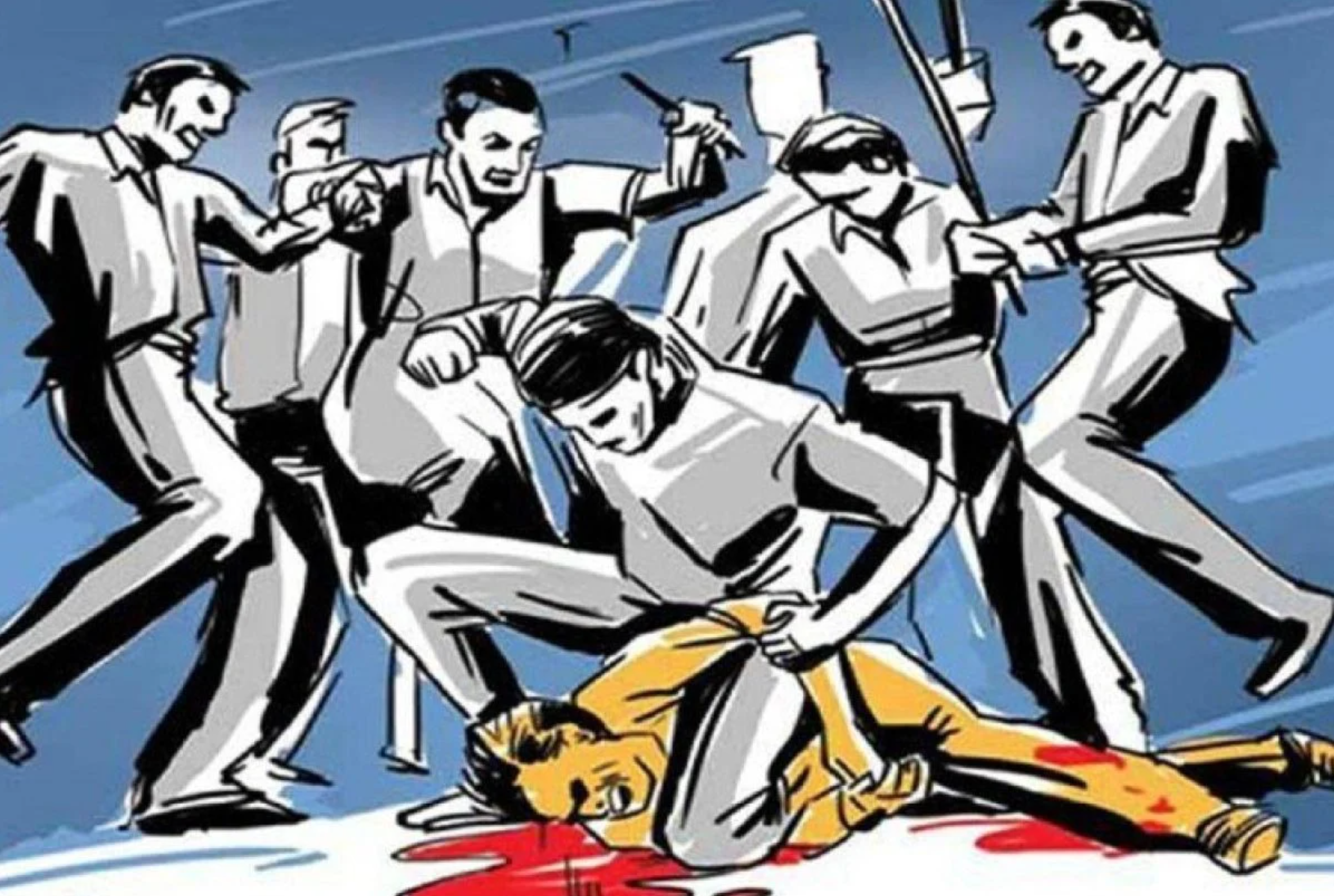
On March 1st, 2026, Roshan Khatoon, a Muslim woman from Amhi village, in Bihar’s Madhubani district, went to the residence of the village pradhan, Kumari Devi, to resolve a dispute. She was set upon by a mob led by the pradhan’s son, Manu Singh, tied to a pole, and beaten severely. She was observing her Ramzan fast and asked for water. Witnesses allege she was instead forced to drink a mixture of urine and alcohol.
On March 2nd, 2026, a 28-year-old Muslim truck driver, Aamir Khan was reportedly shot dead by alleged cow vigilantes while transporting fruit in the industrial town of Bhiwadi in Rajasthan. His family alleged that individuals linked to cow-protection vigilante groups targeted him while he was waiting near a mosque with his vehicle.
On March 4th, 2026, during Holi celebrations, after a water balloon thrown by a child mistakenly hit a Muslim woman, clashes between two neighbouring families led to the death of Mr. Tarun Butolia after he was attacked by a mob in the same evening. 8 people reportedly sustained injuries, and 14 people were arrested. The incident led to heightened tensions in the area, also prompting the Delhi High Court to direct the Delhi Police to take measures to ensure that the celebration of Eid takes place in a peaceful manner. APCR had raised concerns about possible disruption of public life during Eid, especially in wake of a series of hate speeches, inflammatory posters, and public mobilisation in the area that appear to be openly calling for violence against members of the Muslim community in J.J. Colony and surrounding neighbourhoods.
On March 6th, 2026, it was reported that in Bihar’s Darbhanga district, a 65-year-old Muslim man named Abdul Salam was lynched after he attempted to stop a group of young men from using anti-Muslim slurs.
On March 7th, 2026, it was reported that a sugarcane juice shop owned by a Muslim man was set on fire in Lucknow by an angry mob after reports emerged that a minor boy had licked the ice used at the shop. This was following a short clip, widely shared on WhatsApp, X, and other platforms on Friday, depicted a young boy (aged around 7-10) with a mental disability licking a block of ice near the sugarcane machine. The shop owner, Munna, a resident of Bahraich district, has operated the stall peacefully for 10-12 years.
On March 18th, 2026, a group of fourteen young Muslim men broke their fast on a boat in the Ganga river. Those observing Ramzan usually break their fast in the evening for iftar, with a meal or by consuming fruits, dates and juice. The videos that circulated in social media were reportedly of the group of 14 men eating from a large vessel and drinking water. A person from the BJP youth wing, Rajat Jaiswal, filed a complaint alleging that they consumed meat and discarded the remains into the river. In his complaint, he alleged that they had hurt religious sentiments associated with the River Ganga. Within hours, the 14 youth were arrested and remanded to 2 weeks judicial custody, and the ACP, Kotwali immediately tweeted that they were allegedly eating chicken biryani, and had been arrested. The Varanasi Chief Judicial Magistrate even denied bail to the 14 arrested youth on 23rd March, 2026 and stated in its order that the “crimes committed by the accused were of a serious nature and non-bailable.”
There were similar reported incidents of such brutal violence against Muslims in the context of minor altercations reported from Uttar Pradesh, Rajasthan, Bihar and Gujarat. It has been argued that we cannot see these incidents as isolated events anymore. The reason they happen with such impunity across state boundaries is due to the deeper culture of suspicion and dehumanisation towards Muslims fostered by state action and inaction. Muslims are constantly portrayed as outsiders, demonised as infiltrators and even ordinary actions are viewed with suspicion. These crimes of lynching and violence against Muslims emerge from this culture of dehumanisation which has become so much a part of India’s socio-cultural fabric that they don’t excite much media commentary anymore.
In fact to understand the feeling of anxiety among Muslims based on such incidents during Ramzan one has to go to the non-mainstream media which has covered these incidents. As far as the mainstream media is concerned, it is not a newsworthy matter any more. One only has to remember the media coverage given to the lynching of Akhlaq in Dadri in 2015 to the current scenario when the lynching of people like Roshan Khatoon from Aamir Khan barely registers in the media coverage. This indicates the new reality as far as the media’s coverage of violence against Muslims is concerned.
The fact that there seems to be a campaign among the right wing to polarise society during religious festivals be it Id or Holi is undoubtedly responsible for this new scenario when festivals are associated not with joy and celebration but fear and suffering especially for the minority community. The fact that these incidents surface more in BJP ruled states also indicates that these forces feel emboldened in these states that there will be impunity for what after all are not only crimes under the BNS but also calculated attempts to destroy the constitutional promise of fraternity.
Even as we observe this new phenomenon of hate crimes during festivals against Muslims, there is another reality of violence against Dalits which cannot be forgotten.
On February 9th, 2026, a Dalit youth named Rahul was brutally assaulted in Bhadohi in Uttar Pradesh after an argument with Shankar Bind, who objected to Rahul defecating near a canal. The assailant attacked him with casteist slurs and pierced his eye with a motorcycle key, causing Rahul to lose sight in that eye.
In February 2026, a 30-year-old Dalit law student at Government Law College in Churu, Rajasthan, named Meena Meghwal, filed a formal complaint alleging that her professors subjected her to caste-based discrimination and deliberately failed her in an examination. The complaint was filed at the Kotwali Police Station on February 27, in which the complainant, Meena Meghwal, had accused Professor Apoorva Sharma and Professor Anil of making insulting casteist remarks, threatening to fail her, and deliberately awarding her low grades. The professor allegedly used casteist slurs in front of other students and told her, “You are chamari, you are from a lower caste. You cannot do LL.B. It is not your job,” and also threatened to fail her. When she sought a reason for the low marks, she alleged that Professor Sharma told her, “It is my wish. I did it. You people are low caste.”
On March 19th, 2026 a Dalit family in Madhya Pradesh’s Neemuch district had staged a silent protest, seeking permission for mass suicide inside a hospital where they were receiving treatment after an alleged caste-based attack. The family, residing in Dasia village, said the assault stemmed from a dispute on February 26th over a chickpea crop. The victim, Premchand Mogiya, claimed that villagers Mohan Singh and Babu Singh assaulted his daughter and used casteist remarks against her. They said the accused attacked them again on March 15th, even after filing a complaint. The men reportedly assaulted them with sticks, leaving Mogiya, his wife, Mohanbai, and daughter, Neetu, severely injured. They alleged that the police are actively providing protection to the accused. Their protest placards read, “Stop atrocities against Dalits,” “Stop hooliganism under police protection”, “Chief Minister Mohan Yadav ji, give us justice or allow us to commit mass suicide” and “Because of police protection to casteist goons, we may have to abandon our home and land”.
On March 2nd, 2026, a disabled Dalit man, John Mark, a resident of Perumpaththu village, and an Odisha migrant worker, Srinath Gadda, were hacked to death by a nine-member gang armed with sickles and sharp weapons in a targeted caste attack in Tirunelveli, Tamil Nadu. Five others sustained injuries, two critically. Police stated the assault had been planned by young men from a dominant intermediate caste to intimidate Dalit youth in the locality. Seven accused were arrested and remanded to judicial custody.
These instances of caste based violence and discrimination reported in the papers only indicate the continued and pervasive nature of violence based on caste. This is clearly an all-India reality and is part of the broader culture of hostility towards Dalits. To do an archive of atrocities against Dalits is to be reminded of the dehumanisation on grounds of caste which runs counter to the constitutional promise of both fraternity and equality.
One strand of anti-Dalit violence is that it is often inflicted in the context of challenges to the ritual humiliations and indignities imposed by the caste based order. Thus when Meena Meghwal as a Dalit law student asserts her right to education, she is met with casteist hostility. Or when a Dalit family seeks to assert their right to equality, they are brutally assaulted.
We must also remember that such majoritarian politics of hate is only strengthening patriarchical institutions, snatching women’s autonomy and establishing caste-Hindu and Hindutva supremacy through their divisive politics and violence.
In the context of this wave of hate crimes, one instance of an individual, ‘Mohammad’ Deepak standing up against hate has stood out like a ray of hope. Deepak Kumar, a gym owner from Kotdwar, Uttarakhand came into the national spotlight after identifying himself as ‘Mohammad’ Deepak while confronting a Hindutva mob who were harassing a 71-year-old Muslim garment seller over the name of his shop. That moment of confrontation went viral with Deepak’s spontaneous and courageous gesture of resisting a bully capturing an idea of India based on the constitutional value of fraternity.
Deepak’s action got expressions of solidarity from across the country with many taking gym memberships in his gym as an expression of solidarity with Deepak and what he stood for, namely the value of fraternity which is integral to their idea of India. However at the same time, Deepak Kumar is facing protests, online and offline harassment and an FIR lodged by the police. Unfortunately when he moved for the quashing of the FIR, the Uttarakhand Court in an egregious order, not only refused to quash the FIR but also went on to direct him to provide the account of the ‘donations’ credited to his bank account till now, after the video of the incident involving him went viral on the internet.
An egregious instance with respect to justice for caste violence was the judgment in the Una incident on 16th March 2026. Almost ten years ago on July 11, 2016, four young Dalits were publicly flogged and paraded around, in Una in Gir Somnath District of Gujarat, in broad daylight, for skinning a dead cow. The most inhuman kind of torture was meted out to the Dalits on the pretext of cow protection, and the perpetrators brazen in the conviction that there would be no accountability for their crimes uploaded a video of their brutal acts on social media.
In this case the Veraval sessions court convicted and sentenced five people to five years of rigorous imprisonment and acquitted 35 others. In the course of the trial, as many as 80 prosecution witnesses turned hostile. Many of them were cited to be the eyewitnesses of the alleged flogging of the four victims in the case. This acquittal of 35 is an egregious instance of injustice and one hopes that the state will file an appeal challenging the acquittal and thereby sending out a message that there will be accountability for atrocities committed against Dalits.
This brief survey of violence based on caste and religion only indicates that there is a serious problem in India today. The problem is one of continuing and persistent violence against Muslims and Dalits, which has become a part of the daily reality because of the continued impunity of the perpetrators. It’s vital that we continue to push for justice in all such cases.
We salute the bravery and humanity of the gym owner from Uttarkhand, Deepak Kumar who has shown what it means to stand for fraternity even against hate. There are many such unnamed people who are standing up against hate across India, and are resisting and questioning this onslaught. Such courageous efforts point to the reality of another India which lies under the waves of hate. We must therefore, not only draw hope and strength from these instances of bravery, but also work towards building a consciousness that upholds the Preambular values of fraternity, equality and dignity. As the Preamble of the Constitution reads, it is in the hands of ‘We, the People of India’, to build the India in which people from all communities feel safe, and coexist, truly bringing to life the value of Fraternity.