PUCL statement condemning the Transgender Persons (Protection of Rights) Amendment Bill, 2026 as unconstitutional and demanding its immediate withdrawal
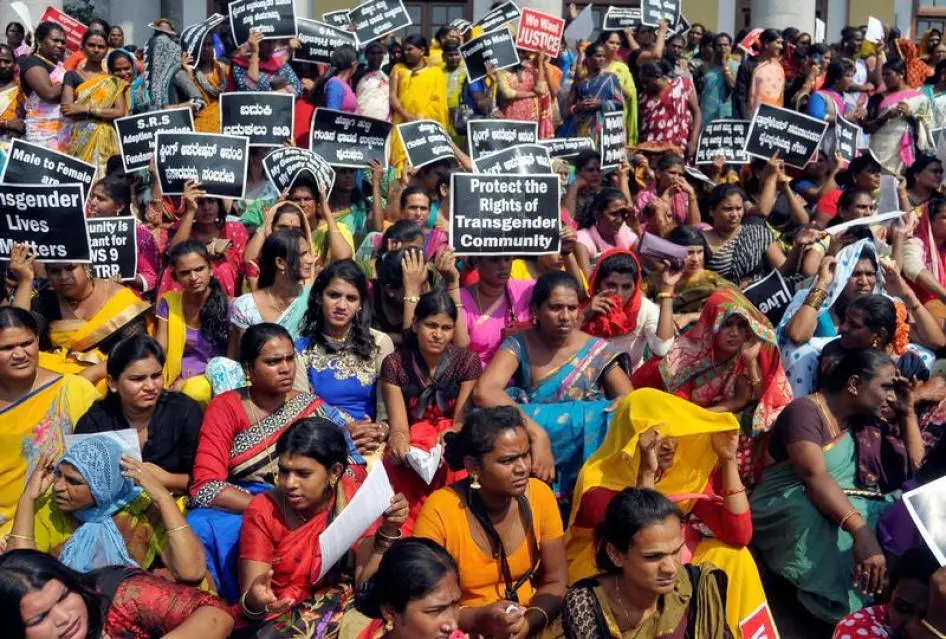
- The amendments proposed in the Transgender Persons (Protection of Rights) Amendment Bill, 2026 constitute a gross dilution of valuable rights provided under the Transgender Persons (Protection of Rights) Act, 2019 and shall result in exclusion of a large number of Transgender Persons from its ambit, denial of their constitutional and statutory rights and targeting their support system.
- The proposed amendments are unconstitutional and infringe upon the fundamental rights of Transgender Persons, while being violative of established international human rights standards and conventions, and judicial precedents.
- The Bill constitutes a blatant betrayal by the Indian government of Transgender citizens, which will only put them to further risk, social and legal exclusion and denial of their basic human rights; The Bill should be withdrawn forthwith!
The Union Social Justice and Empowerment Minister, Dr. Virendra Kumar introduced the Transgender Persons (Protection of Rights) Amendment Bill, 2026 (“the Bill”) in Parliament on March 13th, 2026. The Bill was not released in the public domain for scrutiny and consultation. The Bill is regressive and nothing but a shocking attempt to take back the hard won rights of the transgender community. The aim of the proposed amendments is to destroy the framework set by the Supreme Court of India in its historic decision in NALSA v Union of India (2014) which recognised the right to self-identification of gender by transgender persons and set in place the legal recognition of the rights of the transgender community.
Narrowing of the definition of transgender persons who are entitled to protection by the law
The Bill fundamentally alters the scope of the Transgender Persons (Protection of Rights) Act, 2019 (“the Act”) by diluting the existing definition of a transgender person under Section 2 (k) of the Act and replacing it with a reductive definition of a transgender person. This tantamounts to changing the law altogether and excluding a large number of transgender citizens from the ambit of the law, which is a shocking development.
The amendment at its heart seeks to take away the right of a transgender person to self-identification, which was recognised under the 2019 Act. This is made clear by the deletion of Section 4 (2) of the 2019 Act which read, ‘A person recognised as transgender under sub-section (1) shall have a right to self- perceived gender identity’.
According to the new definition, only three groups are entitled to the protection of the law, namely
1) someone from the traditional socio-cultural trans groups like Kinnars, Jogtis, Hijras, etc.
2) intersex people
3) or a person who has been “by force, allurement, inducement, deceit, or undue influence” been subject to “mutilation, castration, amputation or emasculation” and forcibly made to present “a transgender identity” can be considered a transgender person under this new bill.
A proviso has also been added to specifically exclude persons with different sexual orientations and self-perceived sexual identities.
This amendment instead of expanding the rights of the transgender community dilutes it significantly. By way of this amendment, all the rights which transmen enjoyed will be taken away as transmen are no more considered transgender as far as the law is concerned. Moreover under the amendment, no person can exercise their right to identify as a transwoman either. The only option for a transgender person under the law is a traditional identity. Those who see their identity on a spectrum fall outside this conservative new definition proposed by the amendment. Thus the law expressly discriminates against trans men, trans women, genderqueer and non-binary persons, because of the narrow definition of transgender persons which the proposed law adopts.
Discriminatory intent of the amendment
The objects and reasonings of the Bill goes on to underline that the legislative policy has been formulated to only protect those who “face severe social exclusion due to biological reasons for no fault of their own and no choice of their own.” It then goes on to state that the purpose of the Act was not to “protect each and every class of persons with various gender identities, self-perceived sex/gender identities or gender fluidities.”
This goes against the historic NALSA judgement which recognised the right of transgender persons to determine one’s own gender identity as integral to lead a life with dignity as recognised under Article 21 of the Constitution. It also emphasised that while discrimination on the ground of “sex” is prohibited under Articles 15 and 16 of the Constitution, sex here does not only refer to biological attributes but also one’s self-perceived gender.
The Bill is premised on an entirely false assertion that the intent of the 2019 Act was not to protect all categories of transgender persons, self perceived sex/gender identities and gender fluidities, in as much as the 2019 Act categorically included all transgender persons, including self-perceived gender identities and did not make any distinction or exclusion on the basis of self-perceived gender or sexuality. This is also clear from the Statement of Object and Reasons of the Transgender Persons (Protection of Rights) Bill, 2019, which clearly acknowledged that it was being introduced in compliance of the directions of the Supreme Court of India in the NALSA judgment and further stated under clause 4 (c) that the 2019 Bill sought to “confer right upon transgender persons to be recognised as such, and a right to self-perceived gender identity”.
Accordingly, the `Statement of Objects and Reasons’ of the 2026 amendment Bill by itself reveals the falsely-premised regressive and unconstitutional intent of the proposed law. The Bill discriminates upon a large category of transgender persons by denying them the right to be legally recognised by their gender identity.
Till date only around 37000 people have been registered on their portal in the six years since the Act came into operation. There has been little intent displayed by the government to implement the Act. Instead of ensuring that the transgender persons are legally recognised and benefit from the provisions of the Act, the law is being diluted on the excuse of this very non-implementation and claiming that the object of the Bill is that the enactment “works towards only those who are in actual need of such protection”.
New hurdles introduced for legal recognition of transgender identity
Even for those who fall within the narrow definition of transgender, the ability to change one’s gender is made far more difficult, by bringing in amendments to Section 6 and 7 of the Act. The amendment makes it mandatory for a person to get medical certification, for getting a certificate of (transgender) identity. However even after getting such a certificate, the District Magistrate has the discretion to grant recognition or reject it.
The point to be noted is that even if the law is meant for the restrictive category of so called traditional identities of ‘kinnar, hijra, jogta and aravani’, those who come within this category still have to go through the hoop of getting a medical certificate. The question of mandating even hijras to get a medical certificate does grave violence to the notion of a traditional identity itself. This provision in effect puts forward a medical test to identity if a person belongs to a socio-cultural identity which has existed even prior to the advent of modern medicine!
This will make it highly difficult for transgender persons to obtain a certificate of identity and get legal recognition of their rights. Instead of making the process easier for transgender persons, so they can avail of and assert their rights under the Act, the government has increased the obstacles for transgender persons to gain legal recognition. This is highly discouraging and will only impede the implementation of the Act, which has in any case been poor.
By removing self-identification and introducing the requirement for medical certification, the state is taking over the role of deciding the gender identity of a transgender person. This not only stands in complete violation of the NALSA judgment and upturns the fundamental basis of the 2019 Act, but infringes upon the constitutional rights guaranteed to citizens under Articles 14, 15 and 21 of the Constitution.
Criminalisation of support groups and chosen family of transgender persons
Under the Offences and Penalties chapter, the Bill proceeds to amend Section 18 of the Act. Under the proposed Section 18 (e) and (f), an offence of kidnapping and abduction has been added under the pretence of protecting adults and children. However this provision can be weaponised to target support structures and individuals that provide help to transgender individuals facing abuse and rejection by their natal families. Thus even with respect to traditional communities, the approach of the amendment is tinged with suspicion and capable of misuse to target chosen families. The offence of kidnapping and abduction introduced by way of the amendment should be with the intention to compel the adult / child to assume, adopt or outwardly present transgender identity through ‘force, allurement, deceit, undue influence or otherwise’ by ‘emasculation, mutilation, castration, amputation or any surgical, chemical or hormonal procedure’. The broad wordings of the section, enable its misuse against any person supporting a transgender person in their attempt to undergo sex change / reassignment procedures or to outwardly present themselves as transgender. Moreover, it infringes upon the right to privacy, choice and autonomy of transgender persons, foregrounding a stereotypical understanding of transgender identity as based on coercion, inducement, fraud and violence, and not on personal choice.
Similarly under the proposed Section 18 (g) and (h) new offences have been introduced for compelling an adult/child by ‘force, threat, coercion, allurement, deception, inducement, or undue influence’ to dress, present or conduct themselves outwardly as a transgender person. The irony of this offence sought to be introduced is that, it is in fact transgender persons who are often subjected to violence, discrimination and abuse, and are compelled to hide their transgender identity rather than to assume it. The provisions are reminiscent of the colonial Criminal Tribes Act, 1871 which criminalised transgender persons for appearing dressed or ornamented as women. The provisions are capable of misuse against the support systems of the transgender person, outside of their natal families, and can put the transgender person to further risk.
The approach of the amendment is thus tinged with suspicion even towards those it unequivocally claims to protect, namely the traditional communities. The amendment in fact defines transgender to include those who are ‘forced’ or ‘induced’ to ‘present a transgender identity’ by ‘ emasculation, mutilation or castration’. It seeks to punish such persons who cause ‘mutilation, emasculation , amputation or castration’. This amendment by foregrounding ‘coercion’ as an essential dimension of the transgender identity, does violence to the element of choice and foreground a stereotypical understanding of transgender identity as based on coercion, fraud and violence not on choice.
These newly added offences which can be misused against supportive individuals and chosen families of transgender persons are punishable with rigorous imprisonment from 5 to 10 years going up to life imprisonment, the offences of physical, sexual, emotional and economic abuse of transgender persons attracts a sentence of only six months to 2 years. Meanwhile with there being no provision in the Bharatiya Nyaya Sanhita, 2024 for rape of transwomen, boys and men (offence of sodomy), leaving no other recourse under criminal law for sexual assault of a transgender person. It is unfortunate that the government has lost a valuable opportunity to introduce changes in the law that were being demanded by the transgender community with a view to protect their rights, and have instead introduced this Bill curtailing their rights further and increasing the risk of criminalisation.
Passing this amendment will put in jeopardy the rights of thousands of persons who are currently recognised as transgender. It will limit the right to self-identification for newer generations and represents a setback in the struggle for transgender rights.
This amendment is a part of a wider framework of attack on rights
This amendment is part of a wider series of legislations passed by the Modi government all targeting the rights of vulnerable populations. The repeal of the MGNREGA and the passing of the VG RAMJI Act targets the right to work of the poorest sections of rural India. The passing of the four Labour Codes deprives the working class of core labour rights by diluting core labour standards including the right to association and assembly. BJP ruled states like Maharashtra have introduced legislation which restricts the constitutional right to follow the religion of your choice. Rajasthan has introduced legislation which grants the state the power to prevent those from minority communities from buying property in certain so called disturbed areas. Thus this amendment is part of the broader anti-diversity and anti-rights thrust of this government and must also be opposed.
The Bill must be withdrawn!
- PUCL strongly condemns the Transgender Persons (Protection of Rights) Amendment Bill, 2026, as an unconstitutional and regressive policy that has been tabled in Parliament without consultation with public stakeholders and must be withdrawn immediately.
- The PUCL stands in solidarity with the transgender community in its opposition to the Bill and demands that the Bill be withdrawn forthwith!