Open Letter to the Prime Minister: Government of India should break its Unconstitutional Silence and Condemn the illegal war on Iran!
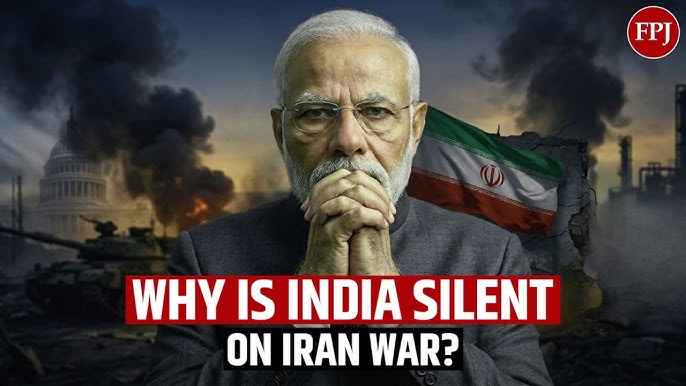
By PUCL National
To
Shri Narendra Modi,
Hon’ble Prime Minister,
Government of India,
New Delhi.
Through:
Principal Secretary to Prime Minister @ connect@mygov.nic.in
Open Letter to the Prime Minister: Government of India should break its Unconstitutional Silence and Condemn the illegal war on Iran
Dear Sir,
We at the PUCL write this letter to you expressing our shock at the unprovoked and illegal bombing of Iran by the United States and Israel which commenced on 28th February, 2026. As of 12th March, 2026 the bombing has spread death and devastation across Iran, with over 1200 civilian deaths, including over 200 children, and the destruction of Iran’s infrastructure in about 200+ cities. The bombing also resulted in the targeted assassination of Iran’s supreme leader, Ayatollah Ali Khamenei.
This unprovoked campaign of terror by Israel and the United States is a violation of international law and it is disturbing that the Government of India did not issue an immediate and unequivocal condemnation.
The Indian Government’s silence on violations of international law by the powerful nations seems to be a matter of policy. The Government of India did not condemn the kidnapping of the Nicolas Maduro, President of Venezuela on 3rd January, 2026 or the previous unprovoked aggression against Iran in June, 2025. The Government has also not condemned the continuing genocide in Gaza from 2023 till date.
It is even more concerning that the Indian government chose to remain silent on 4th March, 2026, when an unarmed Iranian warship, the IRIS Dena, was torpedoed by the United States when it was within Sri Lankan waters, close to the Indian coast. The ship was returning to Iran after the Milan multinational naval exercise hosted by India in Vishakhapatnam between 15th and 25th February, 2026. In fact India’s President, Droupadi Murmu, had participated in the event. Despite being our country’s honoured guests, the young Iranian naval officers were murdered. India till date has failed to condemn the attack. This speaks to India’s abdication of leadership of the global south, and India’s betrayal of both its constitutional vision as well as the abandonment of its oft declared sovereignty over the Indian Ocean.
The only way one can read this silence is as a decision to subordinate our interests to the actions of the United States. This has implications for the core constitutional principle of sovereignty. The cat was out of the bag when the US Treasury Secretary Scott Bessent announced on 6th March that Washington issued a temporary 30-day waiver to allow Indian refiners to buy Russian oil already on vessels. The question rightly being raised across the country is, does India need US permission to import Russian oil? Is this not an infringement of India’s sovereignty?
Our position as a leader of the global south has been tarnished by your decision to visit Israel just 2 days before the bombing began on 28th February, and your declaration to the Israeli Parliament that ‘India stands with Israel firmly, with full conviction, from this moment and beyond.’ Does this mean that the Government of India implicitly supports the bombing of Iran? Or does this mean that it doesn’t stand anymore in solidarity with the Palestinian people? Or does it mean that the arrest warrant issued against Israeli Prime Minister Benjamin Netanyahu – who, incidentally, you have described as your ‘friend’ – by the International Criminal Court for war crimes and crimes against humanity committed in Gaza, is of no significance? Any which way, it is a betrayal of India’s role as a leading voice of the global south countries against imperialism. This is a path the government seems to have consciously eschewed. It is very painful – but we are constrained to point out that the current India-US relationship seems to be one of a master and a vassal.
Foreign policy as conducted by the Indian government has shown itself to be purely transactional and bereft of values. The values which should underpin our foreign policy must derive from our Constitution. The Directive Principles of State Policy, under Article 51(c) oblige India to ‘foster respect for international law’ and under 51(a) require the State to ‘promote international peace and security’, under 51(b), ‘to maintain just and honourable relations between nations’ and under 51(d) ‘encourage settlement of international disputes by arbitration’.
It is further the fundamental duty of every citizen and by extension, every high constitutional functionary, to ‘abide by the Constitution’ and ‘respect its ideal and institutions under Article 51-A (a), to ‘cherish and follow the noble ideals which inspired our national struggle for freedom’ under Article 51-A (b) and to ‘uphold and protect the sovereignty, unity and integrity of India’ under Article 51-A (c). Your own oath of office requires you to ‘do right to all manner of people in accordance with the Constitution and the law, without fear or favour, affection or ill-will.’
As early as in 1946 itself, even before India formally and officially gained independence on 15th August, 1947, the drafters of the Indian Constitution very much envisioned a contribution of a future independent India to global peace. The `Objectives Resolution’ adopted by the Constitutional Assembly on 22nd January, 1947 – which later became the Preamble to the Constitution – very clearly emphasised in sub-point 8 that, ‘this ancient land attains its rightful and honoured place in the world and make its full and willing contribution to the promotion of world peace and the welfare of mankind.’
As Nehru said in the Constituent Assembly, in the famous ‘Tryst with Destiny’ speech, our ‘dreams are for India, but they are also for the world, for all the nations and peoples are too closely knit together today for any one of them to imagine that it can live apart. Peace has been said to be indivisible; so is freedom; so is prosperity now; and so also is disaster in this one world that can no longer be split into isolated fragments.’
The idea of India in the world was also articulated powerfully by Rabindranath Tagore who invoked the ideal of a people who were not ‘afraid’ and a context where ‘the world has not been broken up into fragments by narrow domestic walls.’
India’s foreign policy in the past has derived from these constitutional values of promoting peace, upholding the UN-based international order and defending the sovereignty of nation states, in particular from the global south. In fact, India has had a proud history of opposing aggression by imperial powers drawing from the values of the Indian Constitution.
If these values give a constitutional compass to India’s foreign policy, then the bombing of Iran and the assassination of her Supreme Leader should be condemned as a violation of your oath of office to uphold the Constitution.
The defence of international law is not only a constitutional imperative but also in the self-interest of a middle power like India. As the Canadian Prime Minister Mark Carney put it, ‘the middle powers must act together, because if we’re not at the table, we’re on the menu. When middle powers only negotiate bilaterally with a hegemon, we negotiate from weakness. We accept what’s offered. We compete with each other to be the most accommodating. This is not sovereignty. It’s the performance of sovereignty while accepting subordination. In a world of great power rivalry, the countries in between have a choice – compete with each other for favour, or to combine to create a third path with impact.’
In a rapidly changing world where re-colonisation by the most powerful countries has become the norm, India must act in its self-interest. Cosying up to the hegemon is not in India’s self-interest. India should aim, as Carney indicated, for something larger. It should aim to bring together the middle powers and to constrain the hegemony of the most powerful. It cannot stay silent when President Trump has bombed eight countries in one year laying waste to the principle that even the powerful are subject to international law.
The invasion of Iran has no legal, moral, or ethical justification and must be condemned in the strongest possible terms. This is the mandate of both international law as also the Indian Constitution. If this armed aggression is not condemned by the world’s largest democracy, it becomes one more nail in the coffin of the international legal order. Each time such violations pass without condemnation, the principle of impunity of the powerful gets sanctified.
In this context of a willingness to tear down the rules based order by the powerful nations, India’s silence highlights a dangerous backsliding from our historically pre-eminent position as a non-aligned power. India had stood for an international rules based order based on resolving disputes through dialogue and discussion.
India should therefore have clearly and unequivocally condemned the unprovoked war against Iran, drawing her position both from India’s anti-colonial heritage as well as her Constitution.
We call upon the government of India, to unequivocally condemn the bombing of Iran by US and Israel and the attack on the Iranian warship in the Indian Ocean, in the strongest terms and make a case that India stands in defence of the UN Charter and the right of all nations not to be subjected to wanton attacks.
The Indian government must also return to the constitutional imperative to promote peace and work towards building rapprochement between all parties and bring an end to this needless war. This is vital especially as there is the possibility of the war turning nuclear. This would be a devastating catastrophe which India must work towards preventing.
This is the heart of the idea of India sanctified in the Indian Constitution.
Yours sincerely,
Kavita Srivastava, National President, PUCL
V. Suresh, National General Secretary, PUCL
Picture Credit: Free Press Journal